
There is a version of you that works late while the person who takes credit for your work goes home early. There is a version of you that swallows the insult in the meeting room. That absorbs the contempt without flinching. That gives more than is asked for and receives less than was promised.
What no one tells you: this does not make you professional. It makes you prey.
EXECUTIVE SUMMARY
Chronic burnout and workplace exploitation share a hidden root: the collapse of an internal psychological structure that depth psychologists call the Protector archetype. When this inner guardian erodes through years of social conditioning, enforced agreeableness, and the cultural equation of compliance with virtue every manipulative colleague and exploitative manager senses the vacancy. And they walk in.
This article explores how the mythology of Karuppaswamy, a 2,000-year-old Tamil guardian deity, serves as a precise psychological blueprint for what it means to hold a boundary not as an act of anger, but as an act of law. Drawing on Jungian analytical psychology, the clinical research of Donald Kalsched, and the ancient Tamil tradition of Kaval Daivam (guardian deities), we map a framework for rebuilding the one force inside you that no seminar has taught you to protect.
TABLE OF CONTENTS
- The Unnamed Crisis Boundary Erosion in Modern Professional Life
- The Jungian Protector: What Depth Psychology Says About the Inner Guardian
- The Collapsed Protector: Donald Kalsched and the Hidden Cost of Chronic Compliance
- Karuppaswamy: The Mythology of the Absolute Threshold
- The Iconography of Sovereignty: What Every Symbol Means
- Historical Roots: Warrior-Guardians, Hero Stones, and Deified Protection
- The Origin Myth: Born from Fire, Forged by Crisis
- Pathinettam Padi Karuppaswamy: The Eighteen Sealed Steps
- Sangili Karuppan: When the Shadow Becomes the Weapon
- Myth vs. Fact: Separating Tradition from Misrepresentation
- The Four Pillars: Building Your Internal Guardian
- Common Misconceptions
- FAQ
- Conclusion: Your Peace Is Not a Preference
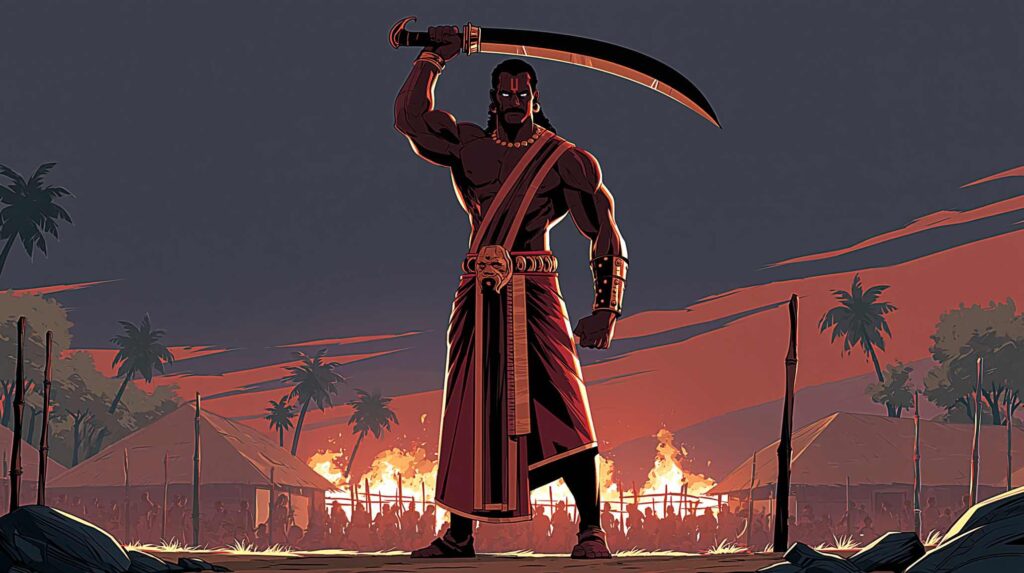
1. The Unnamed Crisis Boundary Erosion in Modern Professional Life
▶ Watch the opening segment: 0:00 – 1:21
Psychologists call it boundary erosion. Executives call it professional burnout. But both terms are too gentle for what is actually happening inside millions of high-performing professionals.
The World Health Organization officially recognized burnout as an occupational phenomenon in 2019, characterizing it by three dimensions: exhaustion, increasing mental distance from one’s work, and reduced professional efficacy. Yet even this clinical framing understates the psychic damage. Because what burnout usually represents is not the depletion of energy it is the collapse of the internal architecture that was supposed to protect that energy in the first place.
Henry Cloud, psychologist and author of the foundational text Boundaries, articulated something that has hardened into clinical truth across decades of therapeutic practice: “You get what you tolerate. Not what you deserve. Not what you earn. What you tolerate.”
This is not a motivational aphorism. It is a behavioral law with neurological underpinning. Research in social dominance theory and compliance psychology consistently shows that human social environments including workplaces are permissive. They expand to occupy whatever space is left unguarded. When your internal guardian is absent, the environment fills the vacuum. The exploitative manager doesn’t create the exploitation. He simply maps an unguarded threshold and walks through it.
The question, then, is not how to manage your time better. It is not which productivity system to install. The question is: how did your inner guardian collapse, and how do you rebuild it?
The answer lives not in a corporate seminar. It lives in the red dust and firelight of Southern India.
2. The Jungian Protector: What Depth Psychology Says About the Inner Guardian
▶ Watch this segment: 1:21
In Jungian analytical psychology, the human psyche is understood not as a single unified entity but as a dynamic system of archetypes primordial, autonomous patterns of behavior and experience that shape perception, relationship, and identity.
Among these archetypes, depth psychologists identify a set of self-preserving forces that operate at the boundary of selfhood. The most critical of these is what is variously called the Protector, the Sentinel, or the Guardian archetype. This internal structure performs a function analogous to an immune system: it distinguishes what belongs inside the self from what must be kept outside. When it is alive and integrated, you do not need to shout to defend a boundary. You do not need to explain it. You simply hold the line and others sense that the line exists.
Carl Jung himself described the psyche’s capacity for self-protection as one of its most fundamental and often most suppressed functions. He observed that in civilized life, the social pressure to appear agreeable, benign, and non-threatening leads individuals to systematically disown the very psychic forces that would protect them.
This disowned energy does not vanish. It becomes what Jung termed the Shadow the repository of everything the conscious self refuses to own. For many high-functioning professionals, the Shadow doesn’t contain weakness, laziness, or moral failings. It contains the capacity to say no. The ability to enforce a limit without apology. The clean, righteous anger that was trained out of them from childhood onward.
Key Insight: The more high-functioning and socially conditioned a person is, the more likely their shadow contains not darkness but power.
3. The Collapsed Protector Donald Kalsched and the Hidden Cost of Chronic Compliance
▶ Watch this segment: 2:36
British psychotherapist Donald Kalsched, in his landmark work The Inner World of Trauma, introduced a concept that reframes how we understand chronic people-pleasing, workplace passivity, and burnout: the collapsed protector.
Kalsched proposed that when boundary violations occur repeatedly especially in formative or high-stakes contexts the psyche responds by splitting. One part of the self becomes hyper-compliant, learning to survive through accommodation, over-performance, and the anticipation of others’ needs. This is the collapsed protector: a guardian who laid down its weapon to avoid the cost of using it.
The second part becomes repressed aggression the undischarged force that had nowhere to go. And here is the hidden cost that no one names openly: suppressed protective aggression does not disappear. It turns inward. It becomes:
- Depression anger directed at the self
- Chronic exhaustion the metabolic cost of sustained self-suppression
- Self-sabotage the psyche’s attempt to enforce limits the conscious self refuses to enforce
- That quiet, gnawing feeling that something essential has been permanently taken
Kalsched’s research showed that both responses the compliant self and the repressed rage ultimately serve the people exploiting you. The compliant self performs. The repressed rage ensures you never act on the clarity you have about the situation.
Rebuilding the protector is not a therapeutic luxury. For many burned-out professionals, it is the primary clinical task.
4. Karuppaswamy: The Mythology of the Absolute Threshold
▶ Watch this segment: 2:36
His name in Tamil carries its meaning directly: Karuppu black. Dark. The primordial absence of light before form. And yet this is a force associated not with destruction, but with protection.
Across Tamil Nadu, Kerala, and Sri Lanka, Karuppaswamy also known as Karuppar, Karuppu Sami, or Karuppan belongs to a category of divine figures called Kaval Daivam: guardian deities of the threshold. Unlike the Brahmanical deities of the inner sanctum who receive flowers, silk, and incense in gilded temples, Karuppaswamy stands at the uncultivated wilderness beyond the village boundary.
He is the god of the absolute line the metaphysical and physical border between the community’s protected interior and the chaos that lies beyond it. His shrines are not placed inside the village. They are placed at its edge. Because a guardian does not live behind what they protect. They stand in front of it.
This positioning is not incidental. It is doctrinal. The boundary itself is sacred and the force that enforces it must dwell at the boundary, not behind it.
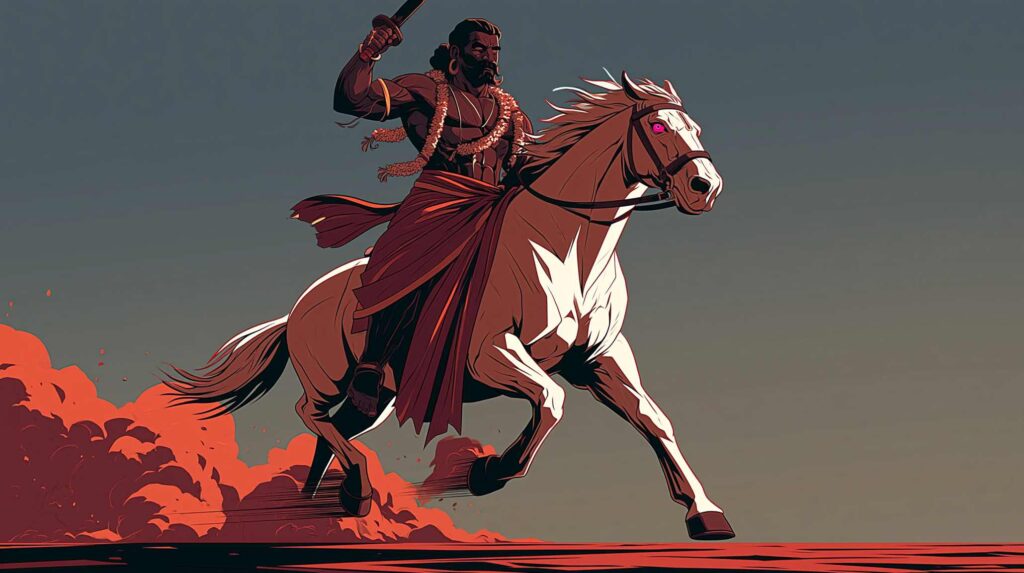
5. The Iconography of Sovereignty What Every Symbol Means
▶ Watch this segment: 2:36
To look upon Karuppaswamy is to receive a visual vocabulary of unapologetic power. Every element of his iconography encodes a precise psychological principle.
The Black Skin
Black as a sky with no stars. In Tamil philosophical tradition, this darkness is not evil it is primordial. It precedes form. It precedes compromise. It is the unmediated real, before social conditioning layers its expectations over what you are.
The Aruval (Curved Blade)
He holds aloft a aruval a curved agricultural sickle, traditionally used for harvesting crops and clearing undergrowth. But in his hands, it becomes the instrument of justice. Consider the symbolism with precision: the same blade used for daily labor becomes the exact tool used to defend the border. Your productivity and your protective aggression are not separate energies. They belong to the same instrument. The question is not whether you have the blade it is whether you have kept it sharp.
The White Horse at Full Gallop
Swift. Decisive. Immediate. He does not deliberate at length before enforcing a boundary. The horse at full gallop communicates what most boundary-setting advice misses entirely: a boundary delayed is a boundary denied. The integrated protector responds with speed, not after careful consideration of how the aggressor might feel.
The Pink Eyes Burning with Vigilance
One message, encoded in his very physiology: I never sleep. I see everything. This is the sentinel energy the state of continuous, low-level attentiveness to encroachment that healthy boundaries require. Not paranoia. Not aggression. Simply: awake.
The Cigars, Spirits, and Blood Offerings
He does not receive the sweet, mild offerings given to gentler deities. He receives what belongs to the raw, undomesticated dimension of human experience. The mainstream religious tradition is often uncomfortable with his existence precisely because he is not mild. He represents the part of the sacred that refuses to be domesticated.
“Your productivity and your protective aggression are not separate energies. They belong to the same blade.”
6. Historical Roots: Warrior-Guardians, Hero Stones, and Deified Protection
▶ Watch this segment: 2:36
Karuppaswamy’s mythology does not exist in isolation from history. During the periods of decentralized political authority that followed the collapse of the major South Indian empires, local warrior-guardians emerged as the de facto protectors of village communities. These individuals typically drawn from lower-caste warrior communities defended crop stores, resolved boundary disputes, and physically stood between the community and marauding forces.
When they died in service of their village, a profound thing happened: the community raised a nadukal or viragal a hero stone in their memory at the very site they had defended. The belief underlying this tradition was not merely commemorative. It was functional: the warrior’s spirit was understood to remain present in the stone as a metaphysical shield, continuing to guard the threshold even in death.
Over centuries, those stones became statues. Those statues became deities. Karuppaswamy became the ultimate instantiation of this process the deification of the guardian function itself, independent of any individual person.
The nadukal (hero stone) tradition is among the oldest documented forms of memorial culture in South Asia, with archaeological evidence dating back to at least the 3rd century BCE in Tamil Nadu. These inscribed stones constitute some of the earliest records of the Tamil language, and they describe with remarkable consistency the act of dying in defense of a community as the highest form of valor.

7. The Origin Myth: Born from Fire, Forged by Crisis
▶ Watch this segment: 5:36
To understand where the guardian force originates within the individual psyche, the mythology requires us to enter the realm of origin narrative.
One of Karuppaswamy’s most powerful origin stories begins with exile and fire.
In a mythological account preserved in oral Tamil tradition, during the time when Sita lived under the protection of Sage Valmiki’s hermitage, a second child is described as being created from sacred grass through divine agency. When the two children were tested by fire, the naturally born child passed through untouched. The child born from sacred grass was consumed by the flames and emerged on the other side burned black. Scarred. Irrevocably altered.
But survived.
That child Karuppannan became the guardian. The protector born not from comfort or inheritance, but from the fire he was never supposed to survive.
This is the first and most essential revelation in the mythology: protection is not born from ease. It is forged in the fire you were never meant to survive. The guardian emerges not from privilege or preparation, but from the accumulation of wound, endurance, and the refusal to be extinguished.
Many professionals reading this will recognize this pattern in their own history. The capacity you now have to recognize exploitation often came from the experience of surviving it. The Jungian Shadow, the disowned protector, was forged in exactly the same furnace.
8. Pathinettam Padi Karuppaswamy: The Eighteen Sealed Steps
▶ Watch this segment: 6:20
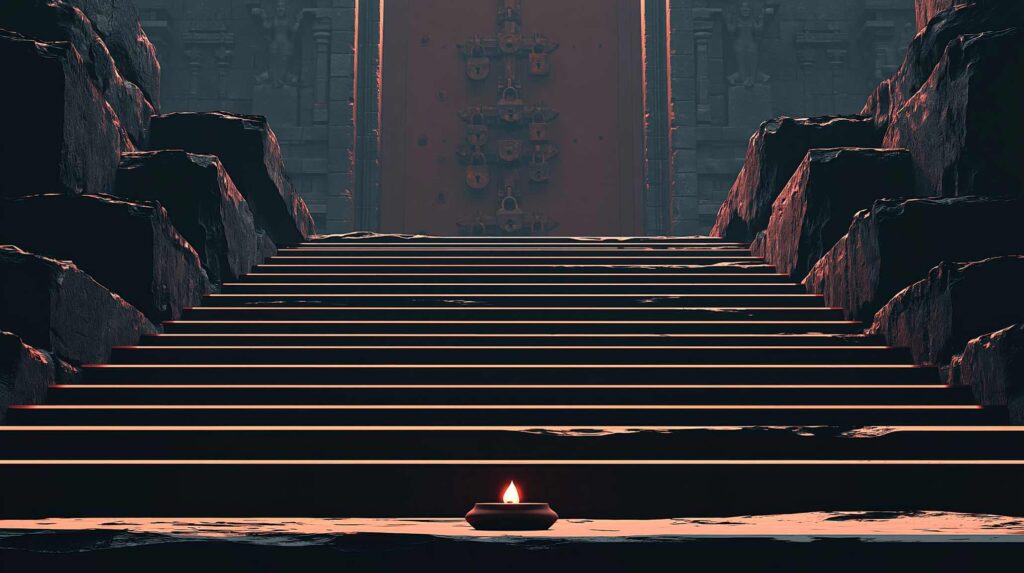
Among the most powerful and theologically dense manifestations of Karuppaswamy is found at Alagar Kovil, a temple complex near Madurai, Tamil Nadu. Here appears Pathinettam Padi Karuppaswamy the Lord of the Eighteen Steps.
What makes this form extraordinarily unusual and psychologically significant is this: there is no idol.
The deity is the threshold itself.
Eighteen granite steps lead up to a set of sealed wooden doors. Doors that remain permanently closed. Traditional belief holds that the sandalwood paste coating those doors exists to cool what lies behind them: a rage too absolute to release carelessly. The sealed doors do not represent weakness or absence they represent a form of power so complete that it requires containment.
The message encoded in this architecture is unambiguous: a boundary is not a preference. It is law. And law is enforced.
This is distinct from the reactive anger of the collapsed protector the explosive outburst that occurs when suppression finally fails. The sealed rage of Pathinettam Padi Karuppaswamy is disciplined, deliberate, and permanent. It is not suppression. It is sovereign restraint: the capacity to hold immense force without discharging it carelessly, and to discharge it with total precision when needed.
9. Sangili Karuppan: When the Shadow Becomes the Weapon
▶ Watch this segment: 7:25
In another form, Karuppaswamy manifests as Sangili Karuppan the Chain Master. In this manifestation, the narrative is one of radical transformation: a being who once moved through destructive forces, who turned against those forces, and who was gifted chains as instruments of justice the ability to bind chaos itself.
This is the second revelation, and it directly addresses the most common fear in shadow work: the fear that if you integrate your disowned aggression, you will simply become what you despise.
Sangili Karuppan’s mythology answers this directly. The shadow, when integrated and directed, does not become destruction. It becomes the weapon that controls destruction. The chains do not merely restrain they precisely contain the forces that would otherwise destabilize everything.
In Jungian terms, this is the difference between shadow suppression and shadow integration. Suppression leaves the force uncontrolled, available to emerge as depression, self-sabotage, or explosive rage. Integration channels it through the conscious will making it available as deliberate, precise, bounded force.
10. Myth vs. Fact: Separating Tradition from Misrepresentation
| Claim | Reality |
|---|---|
| Karuppaswamy is a demon or malevolent figure | He is a guardian deity Kaval Daivam worshipped as a protector of community boundaries. His darkness is primordial, not evil. |
| Blood offerings indicate a “lower” or dangerous cult | Fierce offerings to guardian deities are a documented tradition in Tamil folk religion, reflecting their role as guardians of the raw, uncultivated boundary not the cultivated inner sanctum. |
| Nadukal hero stones are primitive ancestor worship | These are among the earliest documented forms of Tamil inscriptional culture, representing a sophisticated theology of continued guardianship after death. |
| Shadow work means “releasing anger” | In Jungian clinical practice, shadow integration means recognizing and channeling disowned energies not acting them out. |
| Boundary-setting requires confrontation | The integrated protector enforces limits without drama, explanation, or apology precisely because the boundary is a law, not a negotiation. |
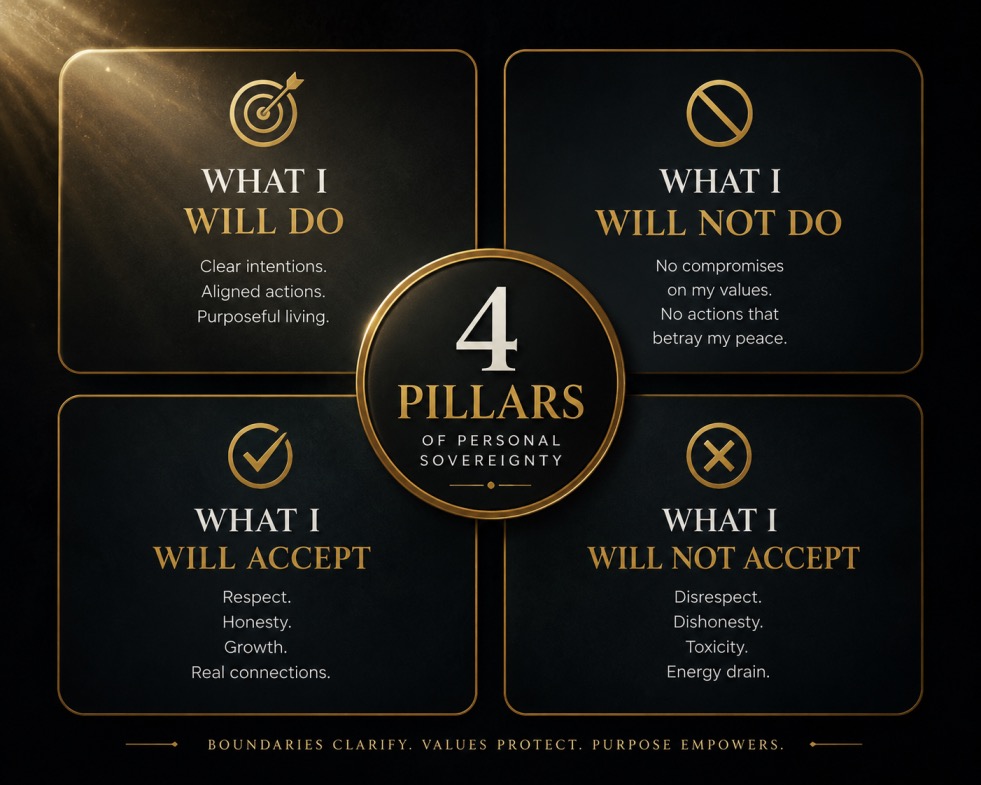
11. The Four Pillars: Building Your Internal Guardian
▶ Watch this segment: 8:45
Karuppaswamy’s temple architecture provides the structural metaphor. Like the eighteen steps, your internal guardian requires a foundation built on four defined pillars:
Pillar One: What You Will Do Where Your Energy Goes
Define with precision the commitments you choose to honor and the contexts in which you will invest your capacity. This is your protected interior your village. Everything inside these walls receives your full energy.
Pillar Two: What You Will Not Do Your Absolute Line
This is the sealed door. Not a preference. Not a negotiating position. An absolute. The integrated protector does not approach this line with anxiety it simply exists, permanently, like the sandalwood-cooled door that has never been opened carelessly.
Pillar Three: What You Will Accept The Standard of Respect Required in Your Space
Define the quality of engagement you require from those who enter your sphere. This is not arrogance it is ecology. A guardian delineates what the protected space requires to remain healthy.
Pillar Four: What You Will Not Accept The Behaviors That Trigger Your Exit
These are the chain-binding conditions of Sangili Karuppan. When specific behaviors cross your threshold, the response is not explosive it is precise and immediate. “The scope we agreed to is locked. I’ll review this Monday.” “My availability ends at six.” “We’ll resolve this during working hours.”
No apology. No explanation. Just the line.
The Test: Collapsed vs. Integrated Response
When a colleague demands your time at 10 PM, a manager expands the agreed workload without discussion, or someone claims credit for your contribution in front of leadership, the collapsed protector responds in one of two ways silence and compliance, or explosive, uncontrolled anger. Both responses serve the person exploiting you.
The integrated protector holds the line. Steadily. Immediately. Without drama. Because the boundary is law, not a feeling.
12. Common Misconceptions
“Setting firm boundaries makes you difficult to work with.”
Research in organizational psychology consistently shows that colleagues with clearly communicated limits are perceived as more trustworthy and are exposed to fewer boundary violations over time, not more.
“Shadow work is only for people in therapy.”
Jungian shadow work is a reflective practice. Its foundational technique identifying the qualities you most suppress and most judge in others as potential mirrors of your own disowned traits requires no clinical setting.
“Anger is unprofessional and should be fully suppressed.”
Neuroscientist Antonio Damasio’s research on patients with damage to the prefrontal-amygdala circuit showed that the absence of emotional response including appropriate indignation correlates with catastrophically poor decision-making in social environments. Clean anger is functional.
“You can exhaust yourself into promotion.”
Decades of organizational behavior research show that individuals who chronically over-deliver without limit-setting are rarely rewarded proportionally. They are instead identified as reliable absorbers of excess load.
FAQ SECTION
Q1: What is Karuppaswamy in Tamil mythology?
Karuppaswamy is a Kaval Daivam a guardian deity in Tamil folk religion, venerated primarily across Tamil Nadu, Kerala, and Sri Lanka. His name derives from the Tamil word karuppu, meaning black or dark. He is positioned at the boundary of the village, standing between the community’s protected interior and the wilderness beyond. His principal function is the absolute enforcement of the threshold.
Q2: What does mythology and psychology have in common?
Both mythology and psychology map the interior landscape of human experience using archetypal frameworks. Carl Jung explicitly argued that myths are the externalized forms of psychological processes that the gods of ancient traditions are, in functional terms, projections of psychic energies. The guardian deity archetype corresponds directly to what depth psychology calls the Protector or Sentinel the self-preserving force that maintains the integrity of the psyche.
Q3: What is the Jungian Protector archetype?
In Jungian analytical psychology, the Protector archetype is a self-preserving psychic structure that functions as an internal guardian distinguishing what belongs within the self’s sovereign territory from what must be kept outside it. When integrated, this force operates without drama or excessive emotion: it simply enforces limits as a matter of psychological law.
Q4: What is shadow work and how does it relate to workplace burnout?
Shadow work is the Jungian practice of identifying and integrating the disowned aspects of the psyche the energies, capacities, and traits that have been suppressed because they conflict with the persona the individual presents to the world. In the context of workplace burnout, the shadow frequently contains the capacity for limit-setting, the ability to say no, and the expression of righteous indignation forces that were conditioned out of the individual through years of socialization toward agreeableness.
Q5: What is a Kaval Daivam?
Kaval Daivam is a Tamil term meaning “guardian deity.” These are folk deities positioned at the boundaries of communities, fields, and sacred sites distinct from the deities of the inner sanctum. Their function is protective rather than intercessionary, and their iconography reflects their role: fierce, armed, unwavering.
Q6: What are nadukal or hero stones in Tamil tradition?
Nadukal (also called viragal) are memorial stones raised by Tamil communities to honor warriors who died defending the village or its resources. These stones bear inscriptions in some of the earliest examples of the Tamil script, and they embody the theological belief that the warrior’s protective spirit remains present in the stone continuing to guard the threshold after death. They represent one of the documented historical roots of guardian deity traditions like Karuppaswamy.
Q7: What is Donald Kalsched’s theory of the collapsed protector?
Donald Kalsched, a Jungian psychotherapist and author of The Inner World of Trauma, proposed that repeated boundary violations particularly in developmental or high-stakes contexts cause the psyche to split into a hyper-compliant persona and a repressed reservoir of protective aggression. The compliant self accommodates; the repressed aggression turns inward, manifesting as depression, self-sabotage, and chronic exhaustion. He called the accommodating structure the “collapsed protector.”
Q8: How do I start rebuilding my psychological boundaries at work?
Begin with Kalsched’s principle: identify what you are tolerating that you should not be tolerating. Then use the Four Pillars framework: define what you will do, what you will not do, what you will accept, and what you will not accept. These four definitions constitute your personal threshold architecture. Practice holding the line without explanation or apology calmly, immediately, without drama.
Q9: Is Karuppaswamy worship mainstream in South India?
Karuppaswamy is extensively venerated in Tamil Nadu, particularly in rural communities, among Dalit communities, and across several occupational and regional traditions. However, his worship exists largely outside the Brahmanical mainstream, which is one reason he remains less visible in popular representations of Hindu mythology. His prominence in folk tradition is extensive and historically documented.
Q10: What is Pathinettam Padi Karuppaswamy?
Pathinettam Padi Karuppaswamy the Lord of the Eighteen Steps is a form of Karuppaswamy venerated at Alagar Kovil near Madurai, Tamil Nadu. Uniquely, there is no idol: the deity manifests as the threshold itself eighteen granite steps leading to permanently sealed wooden doors. This form represents the theological principle that the boundary is the sacred that the act of holding the line is itself the divine function.
Q11: What is the difference between suppression and integration in shadow work?
Suppression involves pushing the disowned energy further below the threshold of conscious awareness, where it accumulates and eventually manifests as either self-destructive behavior or explosive outbursts. Integration involves consciously acknowledging the energy’s existence, understanding its legitimate function, and learning to deploy it with deliberate precision transforming raw protective aggression into what the Sangili Karuppan tradition calls “binding force”: power that contains chaos without becoming it.
Q12: Why does mythology matter for psychological self-development?
Mythological frameworks pre-encode complex psychological insights in forms that bypass the rational defenses of the modern mind. A clinical description of collapsed protector dynamics can be intellectually acknowledged and then filed away. A 2,000-year-old warrior deity standing immovable at the gate of a burning village is felt in the body. Mythology operates at the level of image, which is the native language of the unconscious.
CONCLUSION: Your Peace Is Not a Preference
Somewhere in Tamil Nadu, those sealed wooden doors remain shut. Containing something ancient. Fierce. Entirely awake.
The force they contain is not a cautionary tale about a god. It is a diagnostic image of what lives inside you dormant, suppressed, or perhaps simply waiting.
The people exploiting your compliance are not mythic enemies. They are, as the video frames it with clinical precision, simply forces that found an unguarded threshold. The solution is not anger, not confrontation, not the dramatic declaration of your limits to an HR department. The solution is the return of the guardian to the gate.
Draw the blade. Forge your eighteen steps. Define what you will do and what you will not. Define what you will accept and what triggers your exit. And then hold that line with the precise, unceremonious steadiness of a deity whose eyes have not closed since the village was founded.
Because even disorder recognizes a closed door.
Your peace is not a preference. It is law.
Further Reading
- Carl G. Jung, Two Essays on Analytical Psychology (Princeton University Press)
- Donald Kalsched, The Inner World of Trauma (Routledge, 1996)
- Henry Cloud & John Townsend, Boundaries (Zondervan)
- World Health Organization: Burn-out Classification (ICD-11, QD85)
- Hart, George L. III, “The Poems of Ancient Tamil” Stanford/Berkeley academic Tamil literary scholarship
- Clothey, Fred W., “The Many Faces of Murugan” and broader Tamil religion scholarship (Mouton/De Gruyter)
- Archaeological Survey of India documentation on viragal/nadukal traditions
- V. Kesavan Veluthat, “The Political Structure of Early Medieval South India” for historical guardian warrior context
Other Interesting Posts
- The Office Shapeshifter: Why the Most Dangerous Person in Your Workplace Has Never Lost a Political Fight
- The Guardian Archetype: How Ancient Tamil Mythology Holds the Blueprint for Surviving Toxic Workplaces
- The Tea Horse Road: What the World’s Most Brutal Trade Route Reveals About Human Endurance, Suffering, and the Limits of What a Body Can Bear
- The Rise and Fall of Mesopotamia: How the World’s First Civilisation Still Shapes How We Build and How We Collapse
- Six Gods Who Explain Every Toxic Workplace And the One Who Survives Them All