
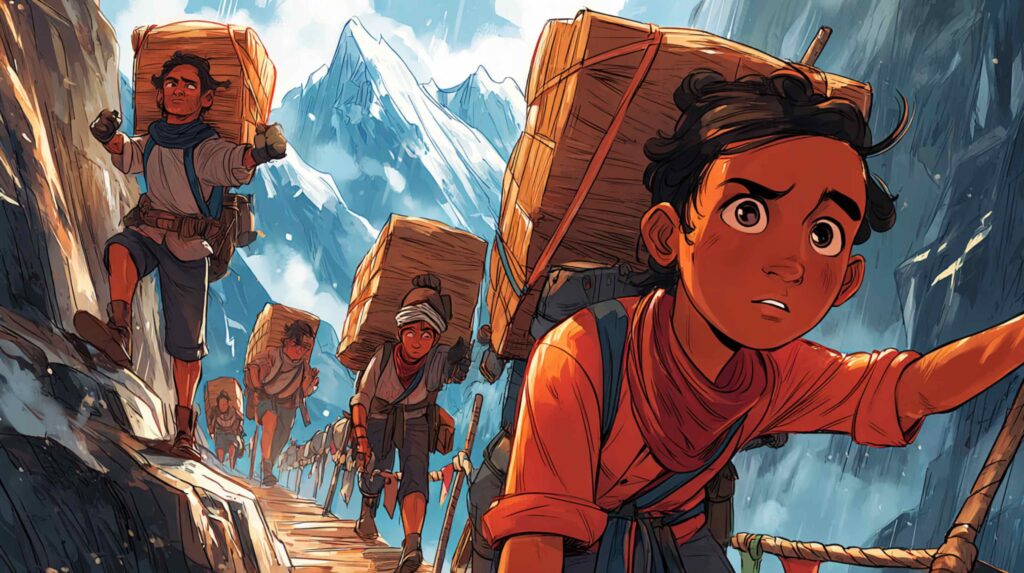
Primary Keyword: “Ancient Tea Horse Road” / “Tea Horse Road history” / “Chamagudao history”
Introduction: The Road That Asks the Oldest Question About Being Human
Ancient Tea horse road does not appear on any ancient map. It has no founding charter, no commemorative monument, no famous battle attached to its name. What it has are depressions worn into cliff-face stone concave notches pressed five, six, eight centimeters deep by millions of individual human footsteps over hundreds of years, cut into vertical rock above gorges two thousand meters deep, in a mountain range so folded and hostile that modern geologists describe it as a tectonic collision frozen mid-argument.
These are not ruins. They are questions. Specifically, the oldest question the human body has ever been asked to answer: how much can you carry, how far, and at what cost to yourself before you stop?
For over a thousand years, tens of thousands of people answered that question on the Ancient Tea Horse Road by picking up a bamboo frame, securing a hundred and fifty kilograms to their spine with a rope across the forehead, and walking into the Hengduan Mountains anyway. Not because the mountains were inviting. Not because the pay was good. Because the road existed, the load existed, and they were the ones available to carry it.
What follows is not a history of trade. It is a reckoning with what human endurance actually looks like when stripped of its mythology.
Key Takeaways
- The Tea Horse Road porters carried loads of approximately 150 kilograms through vertical terrain above 5,000 meters conditions that modern occupational health authorities would classify as physiologically criminal, and that sports science is only now beginning to model accurately.
- The compressed tea bricks they carried were not a beverage they were a pharmacological product that fermented during transport, transformed by the specific brutality of the journey into something more nutritionally potent than what left the valley floor.
- The porters’ documented psychological state at extreme altitude flatness of affect, disengagement from personal memory and future thinking, total absorption in immediate physical reality is not resignation. It is the involuntary form of what contemplative traditions spend lifetimes trying to cultivate deliberately.
- The oral traditions of Naxi, Bai, Khampa, and Yi caravan communities encode centuries of empirical knowledge about terrain, season, and survival expressed in ritual language because ritual was the most durable transmission format available to communities without writing.
- The caravan masters who kept returning to the road even after accumulating enough to stop describe it in terms that Frankl’s logotherapy would recognize immediately: not as masochism, but as the discovery that meaning and suffering are not opposites.
- The stone is harder than any individual human foot. The stone won every individual encounter. Collectively, over centuries, the walkers bent the mountain, and the mountain kept the shape of their passing permanently.
- The road is still there. Above the railway, above the expressway tunnel, above the tourist infrastructure built around its memory the notches are still exactly the size and shape of a human foot, unchanged, waiting.
Key Moments in the Video
- 00:00 – Introduction: The Ancient Tea Horse Road
- 01:54 – The Imperial Equation: Horses for Tea
- 03:00 – The Science and Utility of Puer Tea
- 04:56 – The Porters: 150kg Loads and Survival Diets
- 05:45 – Infrastructure, Currency, and Imperial Control
- 08:38 – Risk, Failure, and the Modern Luxury Market
- 10:10 – Cultural Memory: Ancient Towns and Oral Traditions
- 13:16 – Progress: Psychology, Railways, and Tourism Irony
- 17:16 – Conclusion: The Legacy in the Stone
What Was the Ancient Tea Horse Road and Why Did Human Beings Walk It?
The Mutual Biological Dependency That Made the Road Inevitable
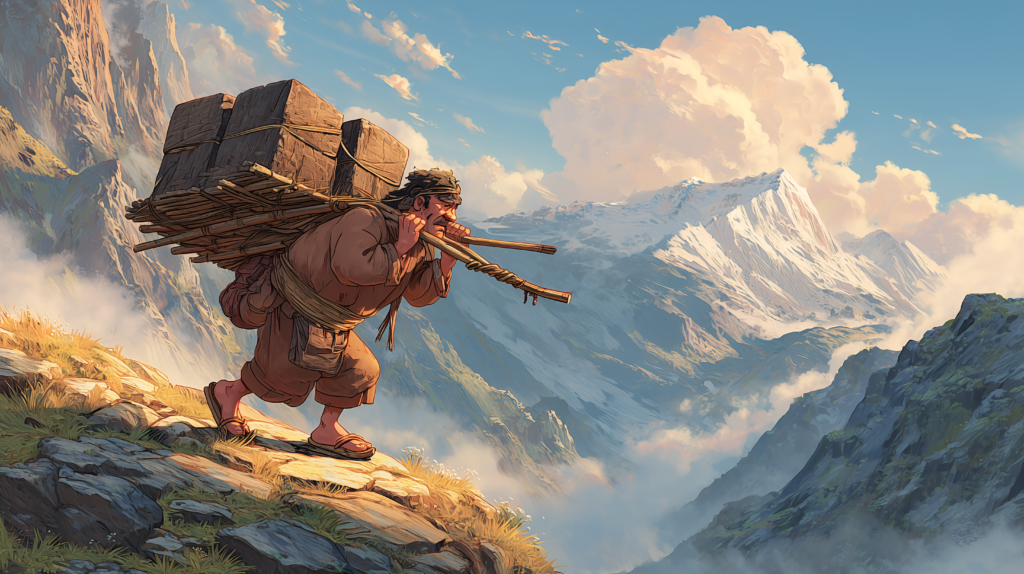
The Hengduan range is not gentle terrain. It is a collision of tectonic plates frozen mid-argument gorges plunging two thousand meters in less than a mile, ridges clawing above five thousand meters, weather that arrives without announcement and departs without apology. Even today, with helicopters and GPS and modern climbing equipment, there are sections of this mountain chain that no road reaches.
And yet. For over a thousand years, a continuous river of human beings walked through it. Carrying, on their backs, loads that modern occupational health authorities would classify as criminal.
One hundred and fifty kilograms. Per person. Wrapped in bamboo frames called dongban, secured by a single rope across the forehead. No draft animals on the steepest sections the paths were too narrow, the angles too severe. A carved wooden stick used to prop the load at rest stops, because sitting down fully under that weight on a mountain slope might mean not being able to stand back up.
The reason the road existed at all was a mutual biological dependency that neither side of the exchange had chosen. Chinese dynastic armies needed warhorses specifically the tall, powerful breeds from the Tibetan highlands, capable of carrying armored cavalry, without which the nomadic steppe confederations from the north would advance unopposed. The Tibetan and highland communities who raised those horses needed, in return, compressed bricks of fermented tea from the forests of Yunnan and Sichuan. At elevations above 3,500 meters, on a diet of overwhelmingly fat and protein with almost no fresh vegetables available for most of the year, the human body faces nutritional gaps that fermented tea uniquely addressed. Without the tea, highland populations faced deficiency and physiological decline. Without the horses, dynasties fell.
Neither side built the road because they wanted to. They built it because neither side could survive without the other. The road was not a choice. It was the only logical conclusion of two populations discovering they could not live without something only the other could provide.
The people who walked it had even less choice than that.
What Was Pu-Erh Tea Actually Doing to the Human Body at 5,000 Meters?
The Unlikely Pharmacology of the World’s Most Demanding Delivery
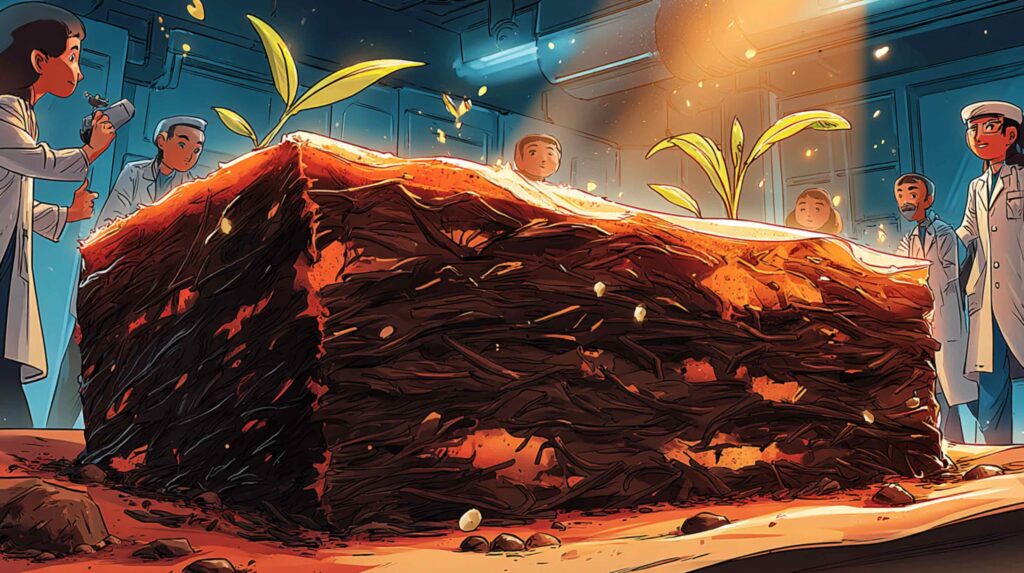
To call what the porters carried “tea” is to describe a mountain as “a hill.” Technically in the same category. Profoundly different in nature.
The production process began in the old-growth forests of Yunnan, where tea trees some centuries old were harvested and compressed under enormous pressure into dense dark bricks. Then the road happened to them. During weeks of transport through the high-altitude passes thermal cycling between blazing afternoon heat and sub-zero nights, absorbed porter sweat, mountain humidity, and constant compression inside the bamboo carrying frames the bricks underwent a microbial transformation. Bacteria and fungi colonized the compressed leaves. Cellular structures broke down. The product that arrived in Lhasa was chemically different from what had left the Yunnan valley.
What Tibetan communities were consuming was closer to a fermented, probiotic food than any beverage the word “tea” normally implies. Research on post-fermented teas the category we now call pu-erh suggests the microbial metabolites generated during long ambient fermentation include compounds that support gut function, aid digestion of the fat-heavy highland diet, and may provide nutritional factors critical to anyone living on yak butter, tsampa, and dried meat with minimal plant variety at extreme altitude. At five thousand meters, where every bodily system operates under duress, that brick of fermented leaves was not a comfort. It was infrastructure. The difference between surviving the winter and not.
The most underappreciated fact about the entire trade system: The journey was part of the production process. The product was not finished when it left Yunnan. It was finished when it arrived in Tibet transformed by the specific conditions of the crossing. The sweat of the porters. The altitude pressure on the bamboo frames. The thermal extremes of the passes. These were not incidental to the product. They were constitutive of it. Every element of the journey that made the road brutal was simultaneously making the tea into something the valley floor alone could never produce.
The human body that carried the tea and the human body that consumed it were both being shaped by the same mountain. Just in different ways.
How Did the Human Body Survive Carrying 150 Kilograms Through the World’s Most Vertical Terrain?
The Biology and Psychology of Extreme Sustained Labor
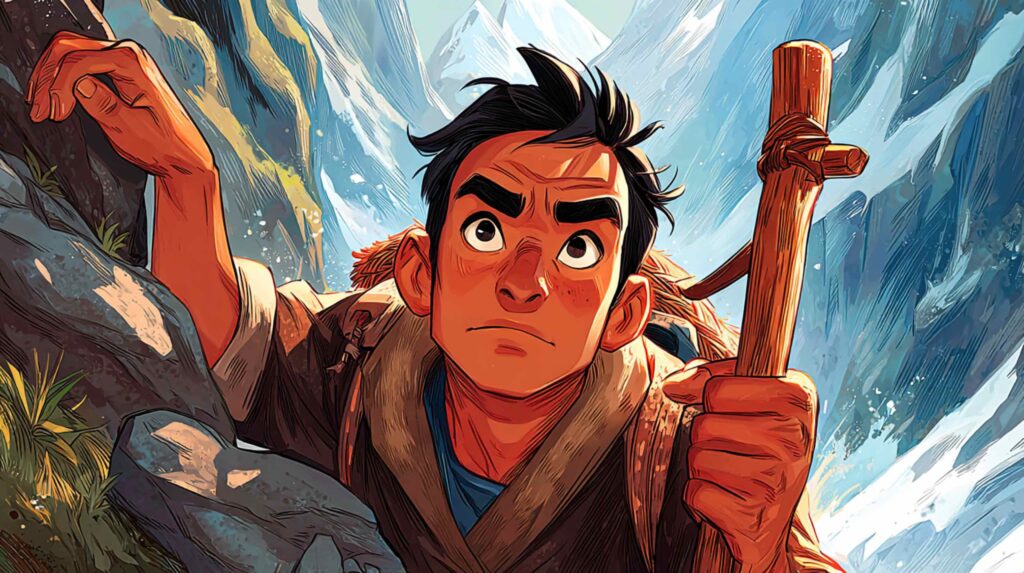
At 150 kilograms per person across terrain that modern mountaineers navigate with careful empty-handed attention, the first question is simply: how?
The fuel was tsampa roasted barley flour mixed with butter tea and yak fat and it represents a nutritional solution that Western sports science has only recently begun to understand in formal terms. Fat-derived energy substrates outperform carbohydrate under sustained hypoxic conditions. Fat requires less oxygen per unit of energy produced, which matters enormously when every breath at altitude delivers a fraction of the oxygen available at sea level. The tsampa diet that looks, from a distance, like a peasant’s meager ration is, examined closely, a precisely calibrated high-altitude performance nutrition protocol. The communities who developed it did so through centuries of empirical refinement, not academic research and arrived at conclusions that formal sports physiology has only recently confirmed.
A porter on the most extreme sections the passes above Litang, the gorge crossings of the Salween, the cliff paths above the Mekong was burning an estimated 7,000 to 8,500 calories per day. The body operating at these loads, at these elevations, over sustained periods, is not merely working hard. It is operating at the physiological edge of what the human organism is calibrated to survive. The distinction matters, because the adaptations required to function at that edge are not incremental. They are transformative and some of them are not reversible.
The psychology that contemporary accounts document and that almost nothing in the historical record adequately names:
At certain elevations, over extended periods, porters entered a specific mental state. Flatness of affect. Dissociation from personal continuity. They stopped speaking of their families. They stopped making plans. They stopped discussing where they had come from or where they were going after the crossing. Chinese officials who encountered caravan parties at high-altitude waypoints described this as resignation, as the dullness of lives worn smooth by difficulty. They were observing something more interesting than that.
Under hypoxic stress, the brain systematically down-regulates the most metabolically expensive cognitive processes specifically the activity of the default mode network, the neural circuitry responsible for self-referential thinking, autobiographical memory retrieval, future simulation, and the ongoing internal narrative the mind normally runs about who we are and what our life means. This is not damage. It is triage. The brain, at altitude under load, decides that keeping the legs moving is more critical than maintaining the story of the self. The internal monologue goes quiet. What remains is: the path. The weight. The next step.
What the altitude enforced on these porters physiologically is what contemplative traditions Zen, Vipassana, Tibetan Buddhist practice spend years trying to cultivate deliberately. Complete present-moment attention. Disengagement from the narrative self. Total absorption in the immediate. The mountain didn’t give them a choice. It simply removed, one by one, everything the mind uses to avoid being exactly where it is.
Whether that constitutes suffering or liberation depends entirely on how you arrived at the condition.
What Did It Feel Like to Cross a Rope Bridge at 4,800 Meters With 150 Kilograms on Your Back?
The Controlled Confrontation With Mortality as a Psychological Practice
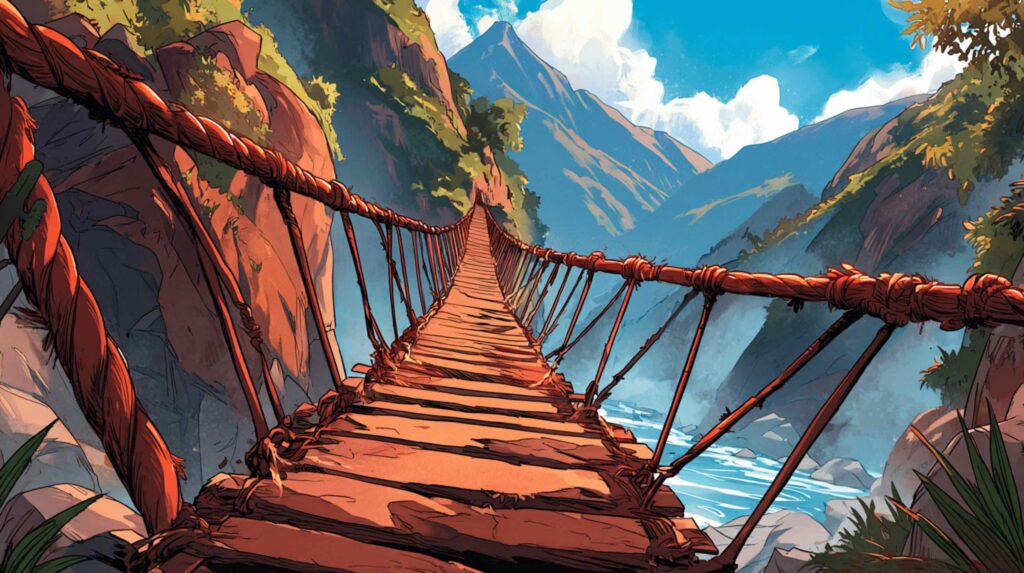
Even the roads eventually ran out of ground. Over the deepest gorges chasms where the mist never lifted and the sound of the river below was a permanent low frequency you eventually stopped hearing because hearing it was too much information to hold the only way forward was up, and out, and across. Rope bridges. Twisted bamboo and braided plant fiber, some of them spanning more than a hundred meters of open air over drops with no visible bottom.
Under normal conditions, a rope bridge of that span flexes and sways under a single person’s weight in ways that most people find unsettling. With 150 kilograms on your back, the dynamic changes in ways that are difficult to describe without having felt them. The sway is not just physical. At that load and that altitude, the body’s relationship to balance is already compromised. The feedback between foot, ground, and brain that normally operates as background process is suddenly a conscious, effortful, attention-consuming task. The bridge becomes the whole world. The flex underfoot becomes the primary reality. The gorge below exists as probability, not presence unless you look down, which you learn, quickly, not to do.
What the bridge crossing represents psychologically is a controlled confrontation with mortality not its metaphor, but its actual proximity. The rope is real. The drop is real. The load on your back has real consequences for the physics of what happens if a braid frays or a foothold gives. The crossing is not dangerous in the way that combat is dangerous, where the threat is external and partially responsive to action. It is dangerous in the way that honesty is dangerous: quietly, completely, and only to the person making the crossing.
The Khampa traders who crossed these bridges hundreds of times across a working life describe something that sounds initially like professional detachment a matter-of-fact relationship with the possibility of falling. But the oral histories suggest something more layered than detachment. The bridge crossings appear in caravan accounts not as traumatic memories to be suppressed but as pivot points crossings after which something in the person’s relationship to ordinary risk was permanently recalibrated. The things that frightened them in the lowlands stopped frightening them. Not because they had become reckless, but because the bridge had given them an accurate reference point.
There is something almost clinical in how this works. The human nervous system calibrates fear responses against actual experienced proximity to harm. People who have stood on a rope bridge at 4,800 meters with 150 kilograms on their back, and crossed, and survived, carry a different risk map in their nervous system than people who have not. The bridge didn’t just test them. It updated them.
Was Tea Brick Really Currency and What Does That Tell Us About What Value Actually Is?
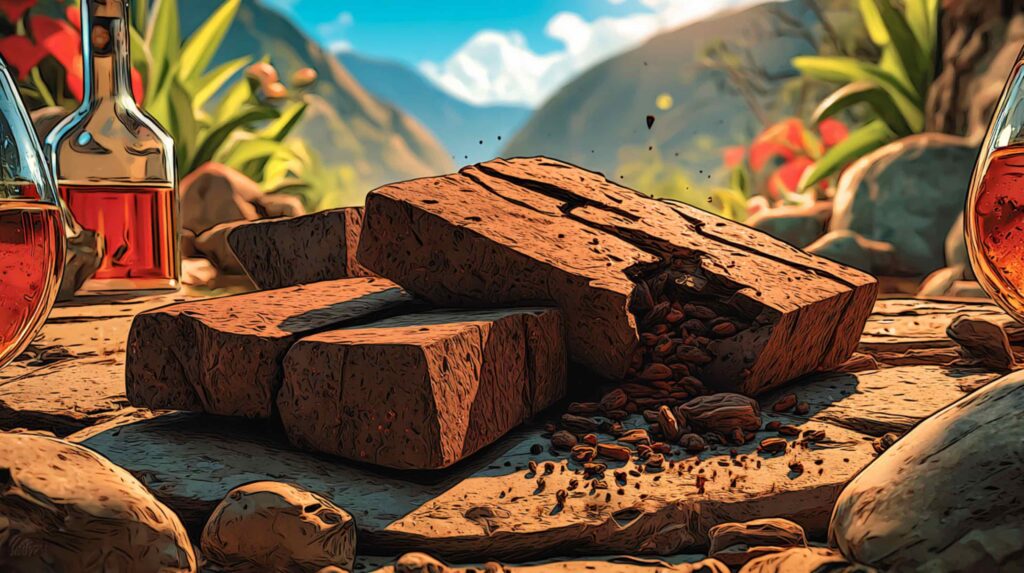
Gold is only valuable if the person on the other side of the trade believes it is valuable. At 4,800 meters, in a blizzard, with three days of walking between you and the nearest human settlement gold does almost nothing for you. It cannot be eaten. It cannot be brewed. It is heavy, and you are already carrying everything your body can hold.
But a brick of compressed, fermented tea can buy shelter. Food. Safe passage. Loyalty. Protection through a pass where the wrong greeting to the wrong group means losing not just the load but the ability to carry any load ever again.
The tea brick was the functional currency of the Himalayan highland economy for centuries. Not as metaphor. Operationally. It was divisible standard scoring lines allowed it to be broken into smaller portions with a blade. It was durable across years of storage. It was universally desired by every community in the highland economy from Yunnan to Nepal. And in a genuine survival situation, unlike every other form of currency that has ever existed, it was edible.
The exchange rates were formalized under the Tang Dynasty and administered through subsequent dynasties one horse valued at approximately 70 to 130 bricks of compressed tea depending on breed, size, and military classification. But the enforcement mechanism was not commercial. It was survival. The brick’s value was not assigned by imperial decree and held in place by institutional trust. It was rooted in the body’s actual need for what the brick contained, at the altitude where the exchange occurred.
This is the rarest form of value there is: the kind that does not depend on anyone else agreeing with you about it.
The surreal contemporary coda: The bricks that survived the road intact stored for decades, occasionally for over a century, in Tibetan monasteries and private collections are now among the most sought-after luxury commodities in the global tea market. Verified lots of genuine pre-1950s Yunnan pu-erh with documented caravan provenance have sold at auction in Hong Kong and Guangzhou for prices comparable to fine Burgundy or blue-chip contemporary art.
A brick that a porter risked his life to carry for an emperor’s cavalry equation now sits in a temperature-controlled display case in a Shanghai collector’s apartment, accruing value by the year. The journey that was supposed to end when the brick arrived at its destination turned out to be the source of its ultimate meaning. The suffering is the provenance. The provenance is the premium. The road never really ended. It just changed who was paying for it.
How Did Oral Tradition Encode a Thousand Years of Empirical Knowledge About How Not to Die?
The Spiritual Geography of the Road and What the Rituals Were Actually Saying
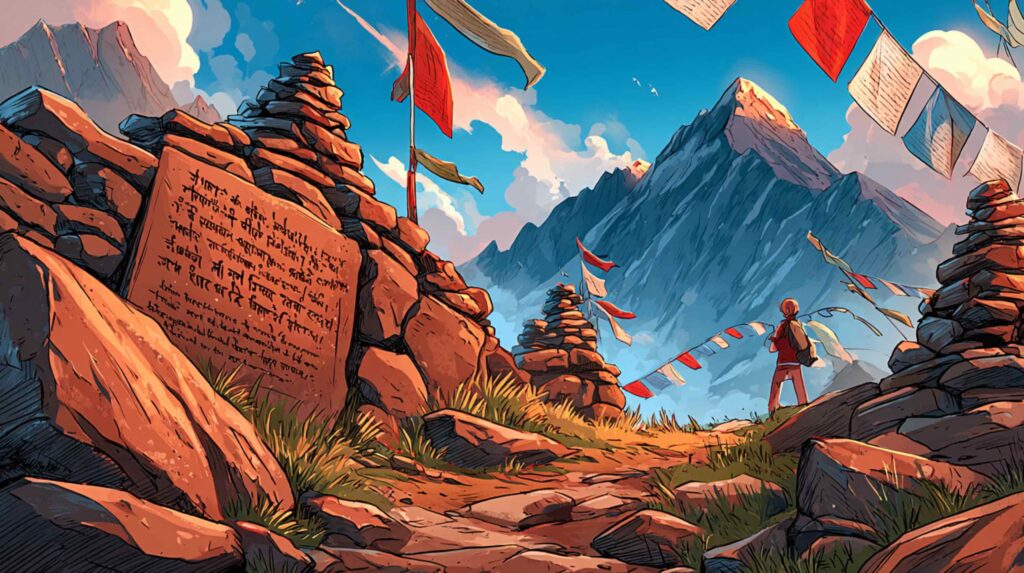
The oral histories of Naxi, Bai, Yi, and Khampa caravan communities are among the most underexamined documents of human adaptation under extreme sustained stress. They are not currently studied primarily as records of performance and survival psychology. They should be.
These accounts passed down not in books but in specific ritual contexts: at funerals, at the blessing of new pack animals, at ceremonies performed at high mountain passes describe the road not as a physical route but as a living entity with moods, memory, and selective appetite. Specific passes required specific offerings before crossing. Certain days in the lunar calendar were safe; others were categorically not. A caravan master’s primary qualification was described consistently not as route knowledge or physical strength, but as what the oral histories call spiritual intelligence: knowing which mountain presences required what acknowledgment, when, and with what degree of urgency.
Every outsider account of this tradition, from Chinese imperial officials to 18th-century Western travelers, describes it as superstition. This is a categorical error that costs us something important.
The insight the academic literature approaches but rarely states plainly: When an oral tradition says “the third-month crossing of the Zhongdian pass requires sacrifice or the road takes a man,” it is almost certainly not expressing a theological claim. It is expressing a statistical observation, encoded in language that is durable, transmissible, and actionable without requiring the person receiving it to understand the underlying mechanism.
The third lunar month in the Hengduan range corresponds to spring snowmelt season when temperature fluctuations create exactly the thermal cycling conditions that destabilize snowpack and increase avalanche frequency dramatically. The ritual acknowledgment required before the crossing was a behavioral protocol that gathered caravan members at the pass entrance, mandated a pause, created a moment of collective environmental assessment, and structurally prevented the rushed, inattentive crossing that kills people in avalanche terrain. The ceremony was the safety briefing. The offering was the mandatory stop before proceeding into a high-risk zone.
The ceremony encoded the data. The ritual carried the statistics. The religious language was the most durable transmission format available to communities who transmitted knowledge through speech and gesture rather than writing.
The Jungian dimension: This is what Jung called the Collective Unconscious in its most practical, least mystical form the accumulated, pre-rational knowledge base that persists in cultural symbol and ritual long after the original experiential knowledge that generated it has been forgotten. The pass ceremony did not require a caravan member to understand snowpack physics. It required them to perform an action that the physics invisibly rewarded. The mountain remembered, in exactly the way the oral histories said it did. It remembered through the accumulated statistical pattern of what happened to crossings at that time of year. The ritual was how human memory kept pace with the mountain’s.
The stupa structures at certain trailheads complicate this further. They were not purely devotional objects. Many of them contained the ashes of porters who did not come home. The landscape is a cemetery that forgot to look like one or rather, a landscape that integrated its dead into its spiritual architecture so completely that the grief and the gratitude became indistinguishable. The prayer flags that now appear in every global meditation supply store originated partly here, as physical markers of successfully completed dangerous passages. They were not decorative. They were receipts. Evidence of someone having come through.
What Did the Architecture of Shaxi Actually Record About the Human Experience of Chronic Danger?
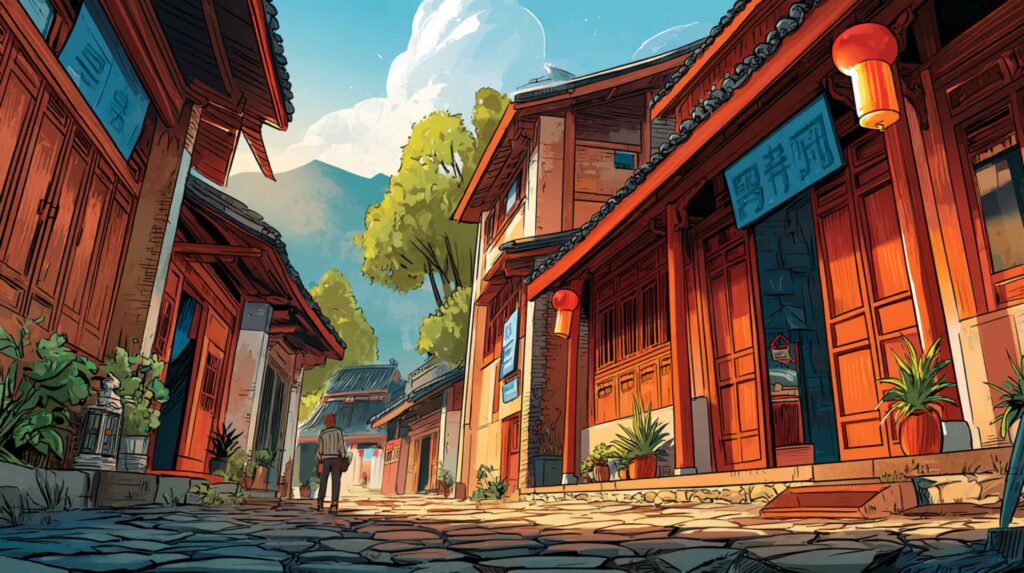
The town of Shaxi in Yunnan’s Jianchuan County is one of the most completely preserved Tea Horse Road waystations surviving today. Its central market square flagstone-paved, ringed by wooden merchant houses with the deep-overhanging eaves characteristic of highland commercial architecture has been provisionally identified by architectural historians as among the last intact ancient market squares on the old road network.
Visitors see a picturesque square. Something that photographs well in golden hour.
What the architecture is actually saying is considerably darker.
The merchant houses have secondary doors cut into their rear walls, connected by narrow passageways between buildings. These were not architectural accidents. They were built escape routes a physical record of the understanding that violence was not an aberration on the Tea Horse Road. It was a statistical certainty, recurring at a frequency that justified incorporating evacuation infrastructure into the construction of every building before the mortar dried.
The architecture of Shaxi is the shape of fear made permanent in wood and stone. Not the sharp, acute fear of a single event but the low, chronic, present-tense awareness of a community that had learned to treat danger as a design constraint rather than an exception to be hoped against. They did not build beautiful buildings and then add safety features. They built safety into the beautiful buildings, because the people living in them had no luxury of pretending the road outside was anything other than what it was.
This is what sustained exposure to genuine risk actually does to human settlements: it integrates the response to danger into the built environment so thoroughly that the danger and the beauty are the same object. The overhanging eaves that create the square’s distinctive visual rhythm are also rain and weather protection for people moving quickly between buildings. The narrow passageways between houses that seem like atmospheric detail are also the route you take when the front door is no longer an option.
The town is a document. Its text is: we knew this could happen. We built accordingly. We stayed anyway.
What Happened to the People Who Could Have Stopped and Didn’t?
The Psychology of Voluntary Return to Impossible Difficulty
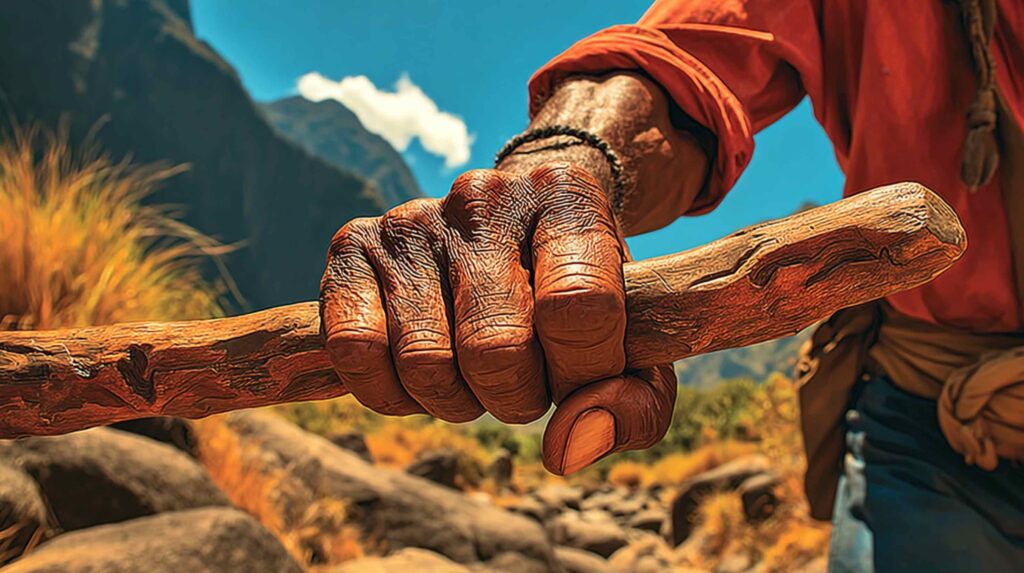
The most psychologically complex fact about the Tea Horse Road is not the loads or the altitude or the bridges. It is this: some of the people who walked it didn’t have to.
The oral histories document caravan masters who had accumulated enough profit to stop who had paid their debts, built their houses, sent their children to safer work and who kept making the crossing anyway. Not because they were coerced. Not because they had no alternative. Because the road had become something for them that the valley floor was not.
What they describe, in accounts recorded by ethnographers in the early twentieth century, is not the pride of a person who has mastered a difficult skill. It is something quieter and harder to name. A sense of rightness. The feeling that they were most completely themselves in conditions that would eliminate anyone who was not. That the mountain specifically, the mountain recognized them in a way that the world below did not.
One recorded oral account from the Khampa trading tradition states: “The pass remembers you. If you have come honestly, it lets you through.”
This is not magical thinking. It is a very precise description of what happens to a human being who returns repeatedly to an environment that demands everything they have: the environment begins to feel like a mirror. It shows them accurately. It has no interest in the social performances, the careful self-presentations, the management of other people’s perceptions that structure so much of ordinary life. The mountain does not care what you say about yourself. It responds only to what you actually are when the weight is maximal and the path is narrow and the bridge is flexing underfoot.
Viktor Frankl, writing from an entirely different context of imposed suffering, described the same discovery: that meaning and suffering are not opposites. That meaning can be found not despite impossible conditions but specifically through the confrontation with them through what he called the “last human freedom,” the ability to choose your orientation toward circumstances you did not choose and cannot change.
The caravan masters who kept returning were not seeking suffering. They were seeking the particular quality of presence that only suffering of that magnitude made available. The clarity. The accuracy. The sense of being entirely real, without remainder, in a way that the ordinary world which asks so little of the body and tolerates so much performance from the self rarely permits.
Camus, writing about Sisyphus, argued that we must imagine him happy. Not despite the boulder. Because of what pushing the boulder made of him. The Tea Horse Road porters had a version of this that Camus, in his Mediterranean study, could only theorize. They had the actual boulder, the actual mountain, the actual weight and some of them, having carried it, could not put it down.
What Did Modernity Erase and What Did It Rightly Replace?
The Qinghai-Tibet Railway and the Question of What Progress Costs
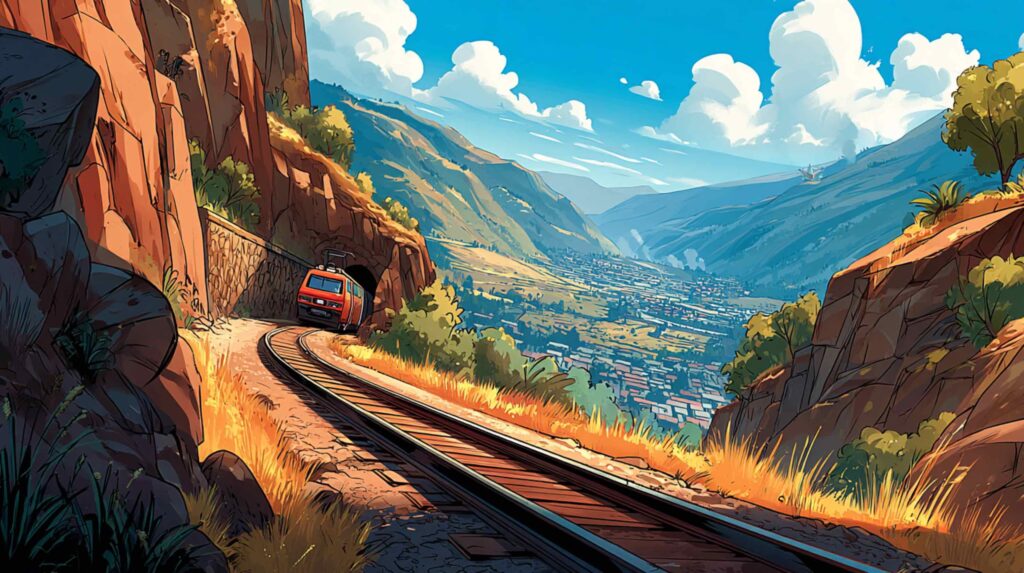
In 2006, the Qinghai-Tibet Railway reached Lhasa. The journey that had taken caravan porters four to six months took 47 hours. New expressway tunnels began threading through mountain ranges the Tea Horse Road had climbed over the hard way. A journey that had defined the physical limit of what a human body could be asked to do became, in a single generation, a recreational choice.
The modernity debate around this development is more complicated than it usually gets framed, and intellectual honesty requires acknowledging both sides of it without aestheticizing either.
The communities along the Tea Horse Road were not living museum exhibits. They were people with complete and legitimate claims on everything the railway delivered: healthcare, economic opportunity, physical safety, the ability to move goods and people without mortgaging a family’s agricultural surplus on a load that might go over a cliff edge and never come back. To frame development as loss is to prefer an outsider’s aesthetic experience of someone else’s poverty over that person’s actual desire for something better. The railway is genuinely good. The new roads are genuinely good.
And yet. What is also disappearing with the infrastructure, with tourism pressure, with the migration of young people away from traditional routes is a specific knowledge archive that has no digital equivalent and no institutional home.
The ecological intelligence encoded in caravan routes that followed the most stable, least avalanche-prone paths for a thousand years of empirical testing. The plant medicine knowledge of supporting communities who understood the pharmacology of altitude and terrain in ways that academic ethnobotany has barely begun to document. The spatial memory of caravan masters who held a thousand kilometers of mountain terrain in their nervous systems, transmitted through demonstration and apprenticeship rather than documentation. The ritual protocols that encoded survival statistics in ceremonial form. All of this is leaving with the last people who needed it to survive.
The satellite map shows the path. It does not know which three steps before the third switchback on the eastern face of the Zhongdian pass have loose rock that will shift under heavy load in wet conditions. The person who walked it carrying 150 kilograms in spring rain knew. That knowledge is not written anywhere. It lives in a body. When the body is gone, it is gone.
The premium recreation paradox: Adventure tourism operators in Lijiang, Shangri-La, and Dali now market multi-day Tea Horse Road treks as premium experiences. Wealthy urban professionals from Beijing, Shanghai, and increasingly from Europe and North America pay significant sums to carry heavy packs through mountain terrain where porters once died carrying three times the weight for wages that kept them perpetually indebted.
What does it mean that we have converted their ordeal into our recreation? It means the road still has power over the human body that no amount of modernity has cancelled. At five thousand meters, gasping, looking down at a gorge with no visible bottom, the altitude performs the same operation on a Beijing software engineer that it performed on a Khampa porter six centuries ago: it removes, one by one, the ambient noise of accumulated ordinary life, the chronic low-grade anxiety about status and performance and the management of other people’s impressions, and forces a confrontation with what the body actually is.
A biological system at the edge of its calibrated range. Not metaphorically. Actually. The heart working at rates it was not designed to sustain at rest. The lungs reaching for oxygen that the air is not supplying. The legs carrying weight that the joint architecture was not designed to hold at this angle, on this surface, at this altitude. This is the body as it actually is, stripped of every prosthetic that ordinary life provides to insulate us from the knowledge of what we are.
The road teaches the same lesson it always taught. Just to different people. At a much higher price. With the option to stop.
What Does the Worn Stone Actually Mean?
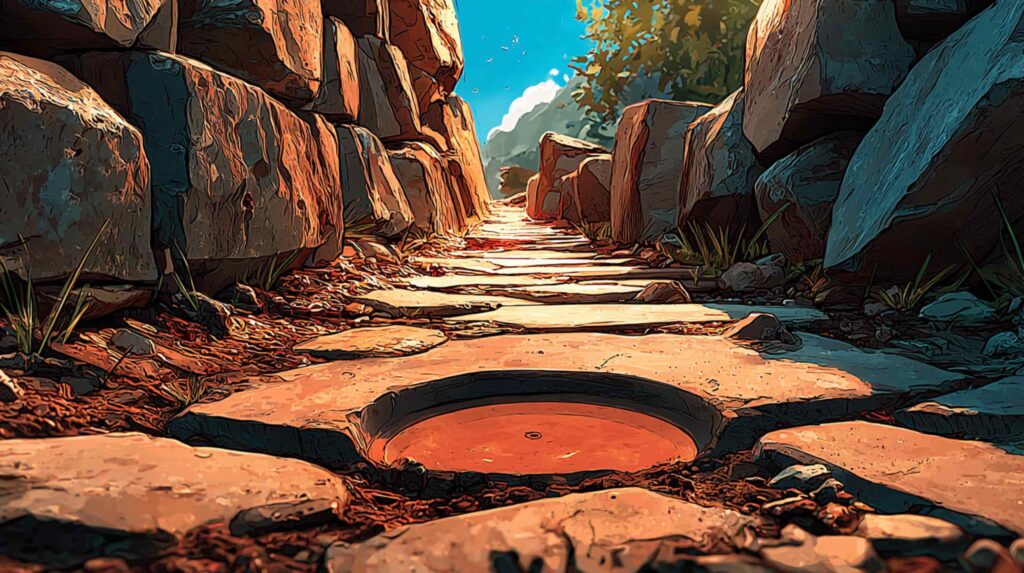
There are places on the Tea Horse Road where the stone is worn concave.
Not by water. By feet. Specifically, by millions of individual human footsteps over hundreds of years pressing into the same spot on the same flagstone the same carved notch on a cliff face above a canyon that no map needed to name because everyone who needed to know it already knew it. These depressions sometimes five, six, eight centimeters deep are among the most quietly devastating physical facts I know of.
Consider what they actually are. The stone is harder than any individual human foot that ever pressed against it. The stone won every single individual encounter. Not one footstep left a measurable mark. And yet collectively, over centuries, the walkers bent mountain stone, and it stayed bent. The mountain kept the shape of their passing. It has kept it for hundreds of years. It will probably keep it for hundreds more.
This is not a metaphor for anything. It is a physical proof of something that feels important to state plainly: the accumulation of ordinary acts, performed consistently, under conditions of genuine difficulty, by people who had no particular reason to believe they were contributing to anything lasting this is capable of bending what seems immovable. Not quickly. Not visibly. Not in any way that any individual walker could have witnessed or claimed credit for. But permanently.
Every person who pressed their foot into that stone was just trying to cross the pass alive, one more time, carrying what they had been told to carry. They were not trying to make a monument. They were not thinking about legacy. They were thinking about the next step and whether the bamboo frame was distributing the weight correctly and whether the weather coming in from the northwest was going to reach the ridge before they did.
The monument they left is the most honest one in human history. Not designed. Not dedicated. Not inscribed with anyone’s name. Just the exact shape and depth of a human foot, pressed into mountain stone by the cumulative weight of people who kept going.
The road is still there. Above the railway. Above the expressway tunnel. Above the tourism infrastructure built around its memory. The notches are still exactly the size and shape of a human foot, unchanged, waiting above the clouds for anyone willing to climb high enough to see them.
That is what the Tea Horse Road actually is. Not a trade route. Not a footnote to the Silk Road. Not a trekking destination.
It is the shape of human endurance pressed into stone. It is proof cut five centimeters deep into mountain rock by people who had no particular reason to believe anyone would ever notice that the human body, pushed to the edge of what it can survive, leaves a mark on the world that outlasts every dynasty that compelled the pushing.
They bent the mountain. It stayed bent.
FAQ: The Tea Horse Road, Pu-Erh Tea, and the History of High-Altitude Human Endurance
Q: What was the Ancient Tea Horse Road and why was it historically significant?
The Ancient Tea Horse Road (Chamagudao) was a network of trade routes through the Hengduan Mountains of southwestern China connecting the tea-producing regions of Yunnan and Sichuan to Tibet and beyond. Historically significant as the primary mechanism of a state-enforced biological exchange compressed fermented tea for Tibetan warhorses essential to Chinese dynastic cavalry the road was active for over a thousand years. Its significance extends beyond trade: it represents one of the most documented examples of sustained extreme human labor in history, with porters regularly carrying loads of approximately 150 kilograms through some of the most vertical terrain on Earth at elevations above 5,000 meters.
Q: What is pu-erh tea and what made it essential for Tibetan highland communities?
Pu-erh is a post-fermented tea produced primarily in Yunnan Province, China. The compressed brick form traded along the Tea Horse Road underwent additional microbial fermentation during transport through the high-altitude passes, creating a product chemically distinct from its original state. At elevation, where the diet is overwhelmingly fat and protein with minimal fresh vegetables available seasonally, the fermented tea provided compounds that addressed specific nutritional gaps supporting gut function, aiding fat digestion, and providing nutritional factors critical to survival on a Highland diet. The tea was not a beverage luxury. It was a survival resource whose nutritional value was enhanced by the specific biological conditions of the journey that delivered it.
Q: What psychological effects did sustained extreme labor at altitude have on Tea Horse Road porters?
Contemporary accounts from Chinese officials, Tibetan lamas, and Western travelers describe a specific psychological state emerging in porters at extreme altitude over sustained periods: flatness of affect, disengagement from autobiographical memory and future thinking, and total absorption in immediate physical reality. Modern neuroscience understands this as the hypoxic suppression of the default mode network the brain circuitry responsible for self-referential thinking and narrative identity as the body conserves metabolic resources for physical function. What outside observers described as resignation or dullness was, physiologically, a state closely resembling what contemplative traditions deliberately cultivate through meditation: complete present-moment attention, disengagement from the narrative self.
Q: What has happened to the Tea Horse Road and its communities in the modern era?
The Qinghai-Tibet Railway (completed to Lhasa in 2006) and subsequent expressway development through the Hengduan region have transformed the communities along the old route, delivering infrastructure, healthcare, and economic connectivity that the caravan system never provided. UNESCO recognized the Tea Horse Road as a cultural heritage route in 2003, and academic survey has identified over 300 distinct route segments across Yunnan, Sichuan, Tibet, Qinghai, and into Nepal, Myanmar, and India. Adventure tourism along surviving segments has grown substantially in the 2020s. What is simultaneously disappearing without institutional archive or digital equivalent is the embodied knowledge of caravan route ecology, altitude survival practice, and the encoded risk protocols preserved in oral tradition by Naxi, Bai, Khampa, and Yi communities.
Mythos and Mortals is a documentary series examining world mythology, ancient civilizations, and the deep history of human endurance. New episodes published every alternate week. Academic sources, verification notes, and further reading listed in the video description.