
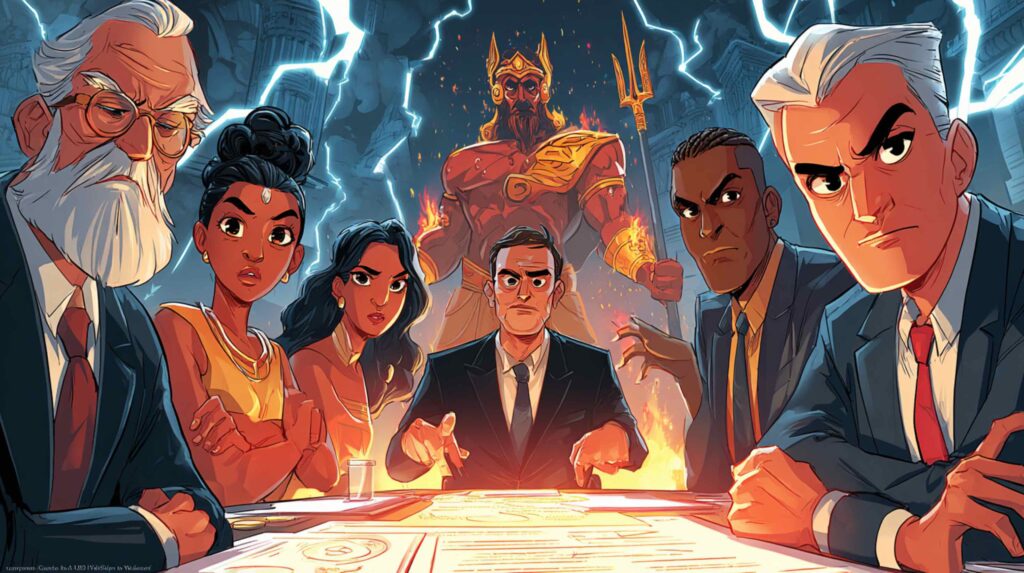
Primary Keyword: toxic workplace archetypes / mythology and leadership / organizational dysfunction myths]
Introduction: The Oldest Org Chart in the World
Toxic Workplace is not a modern problem. Three thousand years before the invention of the performance review, scribes in Mesopotamia, Egypt, and Mesoamerica were documenting the same organizational pathologies we now pay consultants to diagnose. The moody executive who rewrites strategy on a whim. The department head who punishes the wrong people for the right reasons. The colleague who never argues openly but always wins.
These are not personality flaws we invented in the industrial age. They are encoded in the deepest structures of human mythology because they were too common, too consequential, and too dangerous to leave undocumented. The ancients just gave them different job titles.
This article maps six mythological archetypes directly onto modern organizational dysfunction not as metaphor, but as a functional diagnostic. Each figure represents a specific systems failure, a Jungian shadow pattern, and a leadership liability you can recognize, name, and potentially dismantle. Watch the full breakdown in Episode Two of Mythos and Mortals, embedded above.
Key Takeaways
- Zeus represents “VUCA leadership” the executive who generates chaos as a byproduct of unregulated decision-making, not malice
- Hera’s wrath is a systems diagnosis, not a personality one displaced aggression almost always traces to protected dysfunction one level above
- Tezcatlipoca’s “Smoking Mirror” is the earliest documented archetype for information asymmetry as organizational power and it maps eerily onto modern algorithmic opacity
- Apollo is the Seagull Manager in divine form brilliance without infrastructure is a speech, not a strategy
- Seth’s premeditated career sabotage follows a forensically consistent pattern rooted in perceived scarcity, not competition
- Eshu, the Yoruba crossroads deity, represents the most undervalued and under-titled role in any organization: the strategic translator
- Together, these six figures form a complete Jungian shadow ecosystem and every dysfunctional org contains all of them
Key Moments in the Video
- 0:00 – The Ancient Reality of Office Politics
- 0:40 – Zeus: The Unaccountable Executive
- 2:32 – Hera: Displaced Aggression & Systemic Failure
- 4:11 – Tezcatlipoca: The Power of Information Asymmetry
- 5:58 – Series Update: Leadership Evolution & Upcoming Episodes
- 6:28 – Apollo: The Detached “Seagull” Manager
- 8:24 – Seth: Premeditated Career Sabotage
- 10:19 – Eshu: The Strategic Translator & Crossroads Navigator
- 12:03 – Conclusion: Fixing the Systemic Ecosystem
What Does Greek Mythology Actually Tell Us About Leadership Accountability?
Zeus: The VUCA Executive and the Thunderbolt That Hits Everyone Except Him
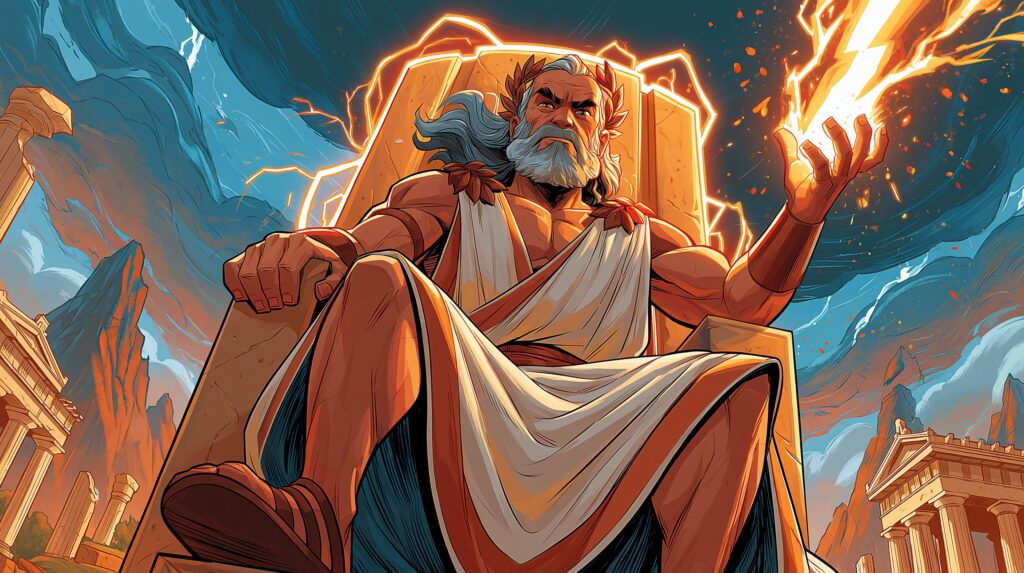
Zeus is the most comprehensively unaccountable executive in recorded mythology. Not the most violent. Not the most ambitious. The most unaccountable and that distinction is the entire diagnosis.
His leadership profile reads like a behavioral scientist’s taxonomy of high-VUCA decision-making: strategy shifts issued without consultation, commitments rescinded without explanation, consequences distributed by proximity to his emotional weather rather than by merit or logic. When his impulsive decision to pursue Leda as a swan triggered a chain of events culminating in the Trojan War, Zeus did not attend a review meeting. He was not summoned. The collapse of a civilization was, from his perspective, a downstream problem.
In psychological terms, this is Jung’s concept of ego inflation the unconscious conviction that one’s will and the world’s order are the same thing. The inflated ego does not create accountability structures because, from inside that psychology, accountability is something that flows downward. The thunderbolt is sovereign. The territory it strikes is just terrain.
The organizational consequence is counterintuitive and specific: Zeus leaders don’t create incompetent teams. They create paralyzed ones. Teams that have been reversed enough times stop making decisions. Innovation doesn’t fail noisily under Zeus leadership it quietly stops being attempted. Everyone learns to wait for the next thunderbolt rather than build anything that might get hit.
Leadership Parallel: The antidote to Zeus is not gentleness. It is documented accountability decisions in writing, rationale shared, reversals explained. The thunderbolt is only dangerous because it comes without warning. Predictability is the structural counter, not culture work.
How Does Displaced Aggression Manifest in Corporate Hierarchies? (The Hera Problem)
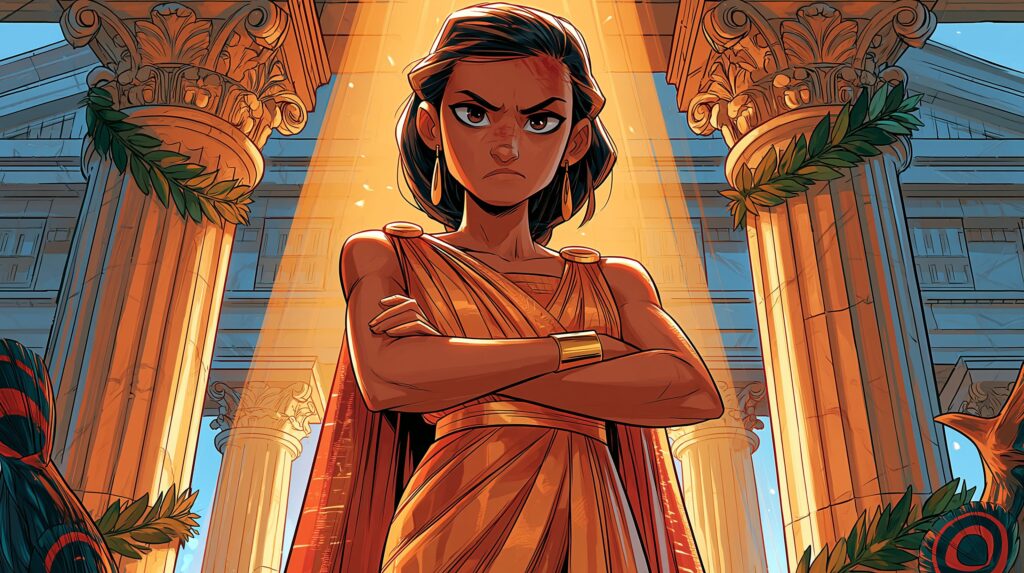
Here is what mythology textbooks consistently miss about Hera: she is not the villain. She is the most rational actor in the entire dysfunctional system and that’s precisely what makes her so dangerous to everyone who isn’t Zeus.
Hera is the queen of a system that has built Zeus’s impunity into its architecture. He betrays her, serially, with total institutional protection. The political structures of Olympus offer her no legitimate recourse no grievance mechanism, no accountability pathway, no peer who will actually hold power to account. So she does what any sufficiently intelligent person does in a system that denies them legitimate power: she redirects.
She punishes Hercules (Zeus’s son by another woman), persecutes Io, torments Semele. She hits adjacent targets people with proximity to the problem she cannot address directly. In psychiatric terms, this is textbook displaced aggression. In Jungian terms, it is the Shadow the part of the psyche that has been denied expression through sanctioned channels, forced underground, and emerging distorted.
The underexamined organizational parallel: Family systems therapist Murray Bowen described a pattern called “scapegoating the identified patient” the family member who carries the symptoms of a systemic dysfunction they did not cause. In organizations, the Hera manager is the identified patient. The department head who makes every planning cycle unbearable, the team lead who sets impossible standards for people below while absorbing impossible demands from above these are not fundamentally cruel people. They are people operating in a Hera system.
Leadership Parallel: When you see displaced aggression in a manager, resist the instinct to address only the manager. Map the system they’re embedded in. Who, one level above them, is protected from accountability? That’s where the condition lives. Hera’s wrath was a symptom. Zeus was the diagnosis.
What Is Tezcatlipoca’s “Smoking Mirror” And Why Does It Matter in Modern Organizations?
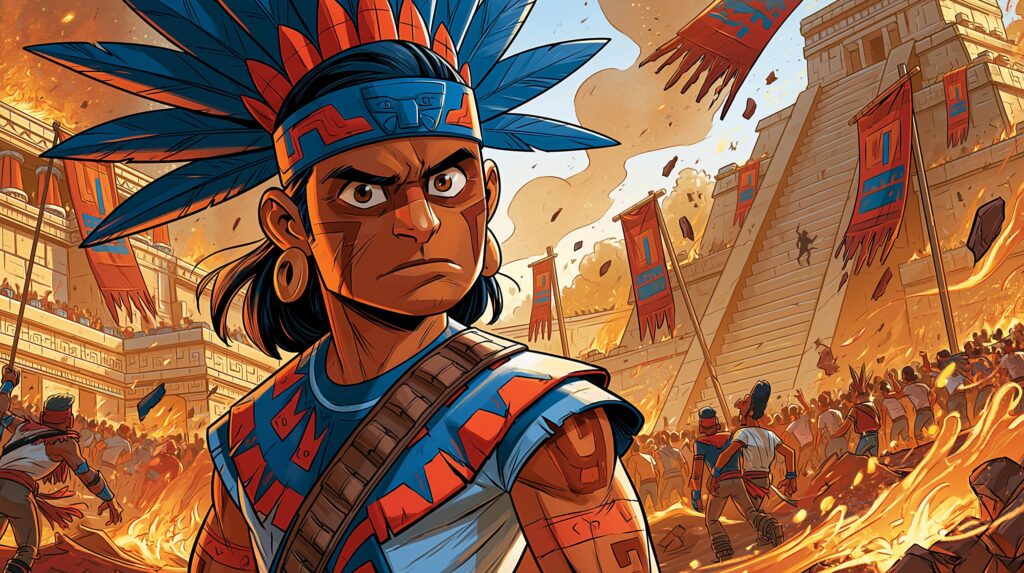
Tezcatlipoca is the most underestimated archetype in this entire series, and the reason is right there in his name: Smoking Mirror. The mirror smokes precisely because you cannot see yourself clearly in it. And that opacity is not a side effect it is the product.
Unlike Zeus, who rules through the unambiguous force of the thunderbolt, Tezcatlipoca rules through information asymmetry. He knows what you don’t know. He positions himself at the intersection of conflicting interests. He reflects different realities to different people not randomly, but with surgical calculation. And in the Aztec creation mythology, he never fights Quetzalcoatl directly. He arranges circumstances. He surfaces the right information at the wrong moment. He makes his opposition defeat itself.
Here is the connection nobody else has drawn: the Smoking Mirror is made of obsidian. In Aztec cosmology, obsidian served two functions simultaneously it was the material from which both mirrors (for divination and reflection) and blades (for ritual sacrifice) were made. The same substance that shows you reality distorted is the substance that cuts you. The person who controls the information also controls the consequence of that information being revealed. This is not metaphor it is the original threat architecture of organizational politics.
In a modern context, the Smoking Mirror operator is the colleague who is never in the argument but always seems to know how it ends. Who forwards emails with devastating timing. Who raises concerns about your project in exactly the right meeting, to exactly the right audience. Whose fingerprints are never on the outcome, but whose interests are always served by it.
The uncommon Jungian reading: Tezcatlipoca is often classified as a Trickster archetype but he’s a critical inversion of it. Where Eshu (as we’ll see) is the constructive Trickster who uses boundary-crossing for translation and resolution, Tezcatlipoca is the predatory Trickster the Shadow side of the same function. The Smoking Mirror and the crossroads are the same archetype, split at the question of intent. Are you using your positional knowledge to connect people or to isolate them?
Leadership Parallel: You cannot fight the Smoking Mirror with direct confrontation that surfaces the conflict without exposing the mechanism. The structural counter is radical transparency: open information flows, documented decision trails, shared visibility on stakeholder communications. When information flows openly, the mirror has nothing left to smoke with.
How the Apollo Leadership Style Destroys Execution (Without Anyone Noticing Until It’s Too Late)
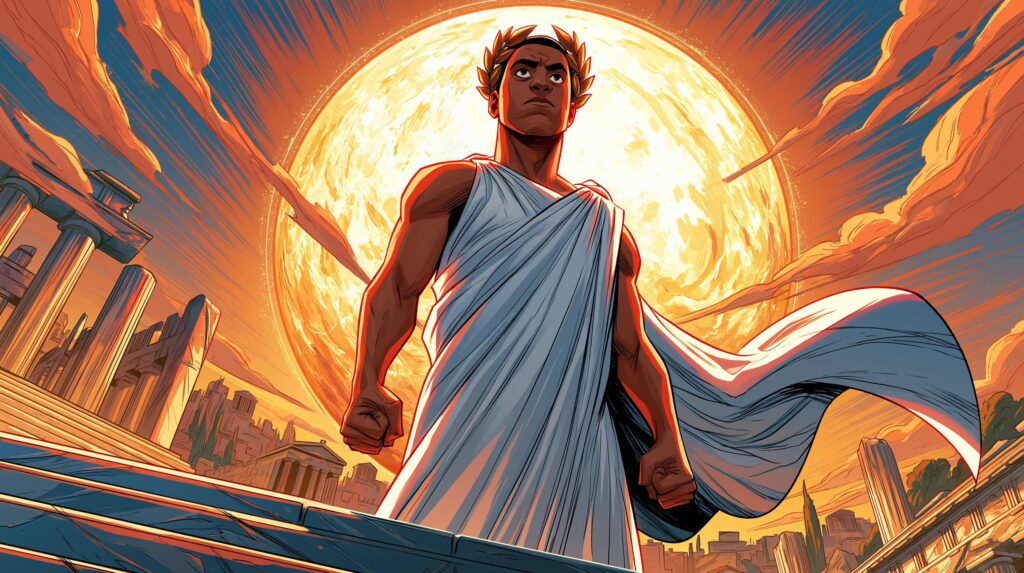
Apollo is the hardest archetype on this list to diagnose, because the damage looks like the leader’s greatest strength. He is, by every measurable metric, the most talented individual in the Greek pantheon. Sun, music, poetry, prophecy this is a profile that would attract a bidding war in any industry.
He is also, structurally speaking, one of the most dangerous leaders to work for.
Apollo’s operational pattern is this: he delivers divine, unquestionable pronouncements from an altitude where follow-up questions are not possible and then he leaves. His oracles were technically accurate and perpetually ambiguous. His prophecies, when fulfilled, turned out to be correct but in ways that required catastrophic misinterpretation to arrive at. He issued the decree and disappeared, leaving mortals below to interpret, debate, and ultimately suffer the consequences of their interpretation.
The modern term for this is the Seagull Manager: flies in, makes noise, drops something everyone has to clean up, and is gone before the review meeting.
The Weberian angle nobody discusses: Sociologist Max Weber distinguished between three types of authority traditional, rational-legal, and charismatic. Apollo is pure charismatic authority legitimate because of personal brilliance, not because of institutional role or documented process. Weber noted that charismatic authority is inherently unstable because it lives entirely in the person, not the structure. When the charismatic leader is present, the organization moves; when they’re absent, it freezes. Apollo leadership creates this instability by design.
Leadership Parallel: You don’t fix the Apollo leader by making them more accessible. You give them an operational translator a strong partner whose explicit job is to convert divine decree into executable reality. The vision is real and often extraordinary. The infrastructure to execute it just doesn’t exist at altitude. Every sun god needs someone who lives on the ground.
What Can the Myth of Seth and Osiris Teach Us About Workplace Sabotage?
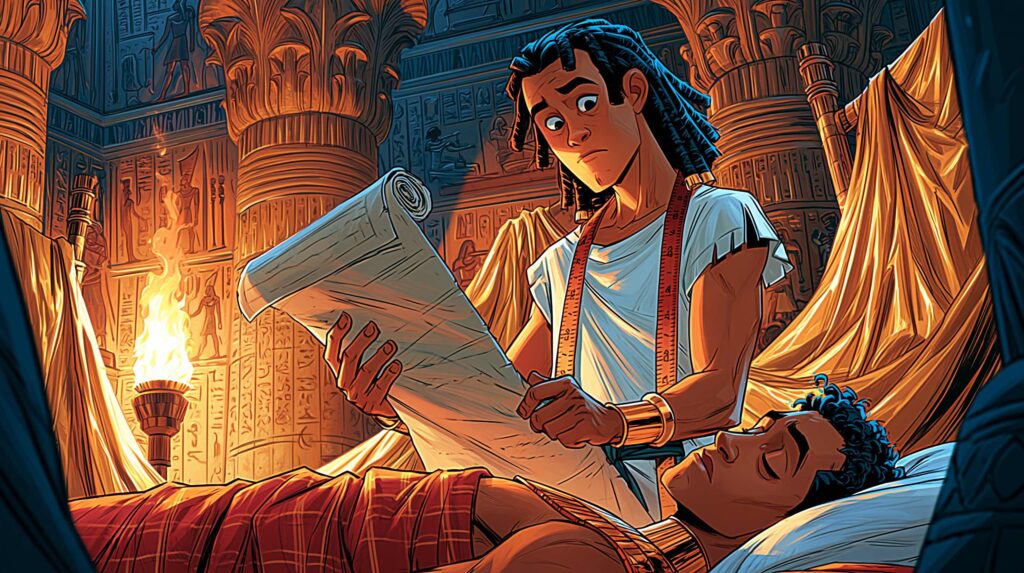
Seth is the only figure on this list whose methodology is genuinely forensic. He didn’t erupt. He didn’t displace. He designed.
He measured Osiris while he slept. Built a coffin to those exact dimensions. Hosted a party, presented the magnificent chest as a prize for whoever fit inside it most perfectly. Osiris, beloved and trusting, climbed in. Seth sealed the lid. Then scattered the body across fourteen provinces of Egypt to ensure there was no possible resurrection.
This is premeditated professional elimination and it has a modern profile that is almost identical in its behavioral signature.
The Seth colleague does not appear hostile. They are conspicuously helpful during the design phase of your initiative. They ask excellent questions in planning meetings, appear deeply engaged, seem to be advocates. What they are actually doing is mapping the architecture of your vulnerability identifying the specific dependencies, the stakeholder fault lines, the moments where the structure of your project is load-bearing. Not to help you reinforce them. To know exactly where to apply pressure when the moment comes.
The original pattern that nobody has named directly: Seth’s sabotage was triggered not by hatred of Osiris, but by something more specific and more organizational: the shadow of eclipse. Osiris was beloved, rising, becoming more central to Egyptian cosmology than Seth believed was appropriate. The threat was not that Osiris had done something wrong it was that Osiris’s ascent made Seth feel himself becoming peripheral. This is the Cain Complex in organizational form: not competitive ambition, but existential anxiety about becoming irrelevant in a system you once felt central to.
Leadership Parallel: The Seth pattern almost always emerges from perceived scarcity, not ambition. When a peer becomes suddenly, unusually interested in the specific mechanics of your project not the outcomes, but the dependencies, the stakeholders, the internal political topography pay attention. Generosity without history is worth examining. And Seth’s methodology always leaves forensic evidence, if you know what to look for: the questions asked were too specific, the helpfulness arrived too early, the interest was in the architecture rather than the mission.
Why Eshu Is the Most Valuable Person in Your Organization And Why Nobody Has Given Them a Title Yet

After Zeus, Hera, Tezcatlipoca, Apollo, and Seth, you might reasonably conclude that organizations are simply mythological battlegrounds with better HR policies. And then there is Eshu.
Eshu is the Yoruba deity of crossroads, communication, and divine intermediary the figure who stands at the point of maximum tension between all opposing forces and doesn’t resolve the conflict through power, but through translation. He speaks every language. He carries meaning across the binary divide in a form that each party can actually receive. He is not aligned with order or chaos. He is aligned with the crossroads itself which is why he is the only figure capable of navigating all the others.
In Jungian terms, Eshu maps precisely onto the Psychopomp the guide-between-worlds figure, structurally equivalent to Hermes in Greek mythology and Narada in the Hindu tradition. The Psychopomp is not defined by power but by permeability: the ability to cross the membrane between worlds that everyone else treats as impermeable.
The network science parallel that nobody has made: In organizational network analysis, researchers distinguish between two types of social capital: bonding capital (dense connections within a group) and bridging capital (connections across groups that would not otherwise interact). The most valuable actors in organizational networks are not those with the most connections, but those with the highest betweenness centrality meaning they sit on the most pathways between otherwise disconnected nodes. Eshu is betweenness centrality made divine.
The problem is that organizations almost never formally title this role. The Eshu operator is often found in mid-level positions that have been systematically undervalued because their output “things didn’t fall apart” and “the two departments finally understood each other” is invisible in most performance frameworks. You can’t chart a conflict that didn’t happen.
Leadership Parallel: Organizations that have an Eshu survive their internal wars. Organizations that don’t keep having the same argument in different fonts, across different quarters, in different PowerPoint templates. The strategic investment is simple: identify who in your organization is already performing this function informally, and then give them the structural authority to do it formally. The crossroads operator doesn’t need power. They need legitimacy.
The Shadow Ecosystem: Why These Six Archetypes Always Appear Together
Here is the synthesis that the individual mythologies point toward but don’t state directly.
These six figures are not six separate pathologies. They form a complete Jungian Shadow ecosystem a closed system of dysfunctions that feed each other, require each other, and collectively prevent the kind of organizational health that any of them, individually, claims to want.
Zeus’s unaccountability creates the system in which Hera’s displacement is inevitable. Hera’s displaced aggression generates the information vacuum that Tezcatlipoca fills. Tezcatlipoca’s information asymmetry enables the ambiguity that Apollo’s oracle-style leadership depends on. Apollo’s detachment creates the execution gaps that Seth can exploit. And Seth’s scarcity-driven sabotage reinforces the zero-sum environment that makes Zeus feel the thunderbolt is his only legitimate tool.
Remove Eshu from this ecosystem and it becomes self-perpetuating. The translator is the only figure whose function is to create conditions under which the other five stop being necessary.
Toxic politics are not a personality problem. They are a systems problem that expresses itself through personalities. Fix the accountability structures, the information flows, and the scarcity architectures and the Zeus-Hera-Seth complex loses most of its fuel. The personalities don’t change. The system stops feeding them.
FAQ: Ancient Mythology, Modern Workplaces, and Organizational Psychology
Q: Are these mythological archetypes connected to any established psychological frameworks?
Yes. The six archetypes map directly onto Jungian psychological theory. Zeus represents ego inflation (the Self overextended without accountability). Hera is the Anima-in-shadow (legitimate relational need expressed through displacement when direct expression is denied). Tezcatlipoca is the predatory Trickster, the shadow-side of the Hermes/Eshu function. Apollo is the Persona mask all surface brilliance, no integrated Self behind it. Seth is pure Shadow the unconscious resentment that becomes premeditated when left unaddressed. Eshu is the Psychopomp, the guide between psychological worlds.
Q: How do you identify a “Tezcatlipoca” type in your organization?
The behavioral signature is consistent: they are never in the argument but always seem to know its outcome. Their information advantages are used for personal positioning rather than collective benefit. They ask questions about organizational vulnerabilities rather than organizational goals. The diagnostic is not about personality it is about the direction in which their political intelligence flows. Does it benefit the system or themselves?
Q: What is the most common combination of these archetypes in real organizations?
The Zeus-Apollo combination is most common in fast-scaling tech environments: an unaccountable executive (Zeus) whose strategy is delivered via oracle (Apollo) without operational infrastructure. The Seth-Tezcatlipoca combination is common in legacy organizations undergoing leadership transition, where proximity to scarcity is highest and information asymmetry is most easily weaponized.
Q: Is there a practical way to introduce “Eshu” capacity into an organization that doesn’t currently have it?
The structural intervention is identifying who is already performing informal translation work between siloed functions and formalizing both their role and their authority. The title matters less than the explicit mandate: this person’s job is to represent each function accurately to the others. Organizations that have done this successfully often find the role naturally gravitates toward someone with cross-functional experience, high trust capital, and critically no territorial investment in either side of the conflicts they’re navigating.
Watch Next: The Myth Series Continues
If the archetypes above felt uncomfortably recognizable good. That discomfort is the beginning of a diagnosis, not a verdict.
Episode One: From Myth to Mission How Ancient Leadership Archetypes Became Modern Management Theory
Traces the evolution of the hero-king archetype from Gilgamesh through Rama, Hercules, and Odin and argues that the modern CEO role inherits more from mythological kingship than from industrial management. If Zeus is who you don’t want to become, Episode One is the roadmap for who you do.
At Mythos & Mortals, we believe that the shadows of the past illuminate the challenges of the present. Our channel bridges the gap between ancient mythology and modern professional life, offering profound parallels to help you navigate the complexities of leadership, innovation, and career survival. By examining the mistakes of gods and the triumphs of legends, we find timeless solutions to the issues we face in the boardroom today. History isn’t just behind us, it’s happening right now in your office.