
Primary Keyword: “Mesopotamia rise and fall” / “history of ancient Mesopotamia” / “why civilizations collapse”
Introduction: The Oldest Systems Problem in Human History
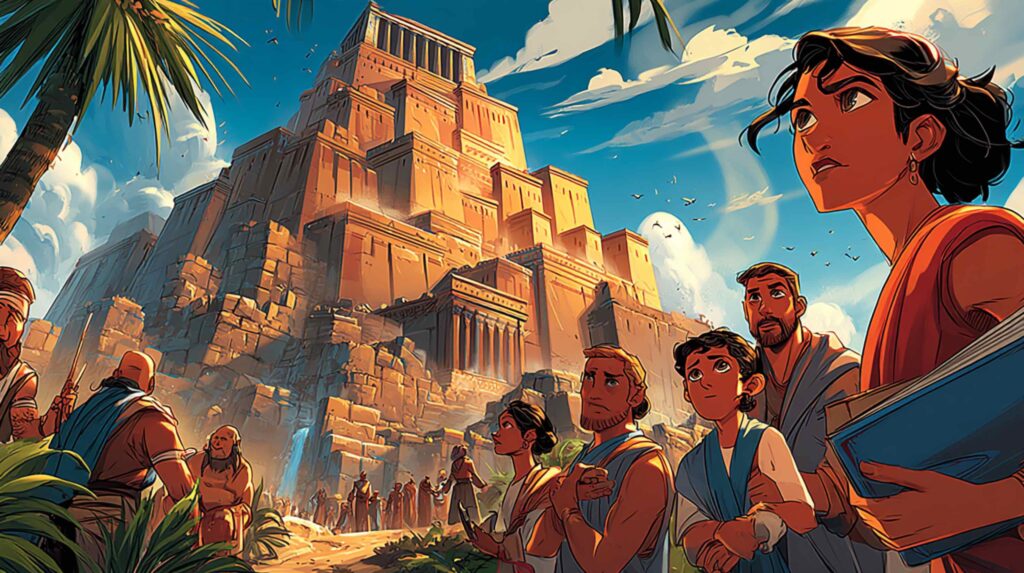
Mesopotamia begins not with a war, a king, or a god but with a drainage ditch. Sometime around 5000 BCE, in a flat, flood-prone valley between the Tigris and Euphrates rivers, a group of people with no military advantage, no stone, no timber, and no natural harbors decided that the only way to survive was to cooperate on an engineering problem too large for any one of them to solve. That decision to dig coordinated canals, to build shared infrastructure, to agree on collective management triggered the most consequential chain reaction in human history: the invention of writing, law, cities, mathematics, banking, literature, and eventually, the organizational logic that every modern institution still runs on.
Five thousand years later, that civilization is buried under the Iraqi desert. And the question it leaves behind how did the people who invented time get lost to it? is one of the most operationally useful questions any builder, leader, or organization can sit with.
This article is the written companion to Civilization series of Mythos and Mortals. Watch the full documentary above.
Key Takeaways
- Sumerian civilization was not an achievement of geography or genius it was an emergent property of solving an impossible coordination problem. Necessity built everything.
- The world’s first written documents were administrative spreadsheets, not literature which means bureaucratic infrastructure preceded every cultural achievement that followed.
- The Akkadian Empire was the world’s first “platform play”: Sargon standardized weights, measures, and administrative protocol across conquered territory, making all subsequent economic activity interoperable.
- The Akkadian collapse is the earliest documented case of what Nassim Taleb calls a “Black Swan” a low-probability, high-magnitude climate event (the 4.2 Kiloyear drought) that exposed structural overextension that was already there.
- Babylon’s legal code reveals a more nuanced society than the “eye for an eye” quotation suggests one with wage regulation, divorce protections, debt slavery limits, and commercial liability frameworks.
- Assyria’s greatest achievement was not military it was Ashurbanipal’s Library at Nineveh, the world’s first organized archive of human knowledge. The most feared war machine in history also built the first library.
- Mesopotamia’s most durable invention was not the ziggurat or the Hanging Gardens it was the clay tablet itself, which survived precisely because the fires that destroyed everything around it baked the clay into something indestructible.
- The real lesson is not about empire cycles. It is about what survives them: invisible infrastructure, recorded knowledge, and the institutional ideas that outlast every dynasty that hosted them.
Key Moments in the Video
- 00:00 – Introduction: The Cradle of Civilisation
- 01:55 – Sumer: The Birth of Civilisation
- 10:34 – Akkad: The World’s First Empire
- 15:38 – Babylon: Law, Science, and Splendour
- 23:20 – Assyria: The Iron Empire and the Library of Nineveh
- 27:32 – The Final Twilight and Modern Legacy
What Made Sumer the Most Consequential Accidental Civilization in History?
How a Drainage Ditch Became the Foundation of Everything We Know

The standard historical narrative positions civilization as an achievement something humanity eventually reached, like a summit, once it had accumulated enough intelligence or stability or vision. Sumer dismantles this entirely.
The Sumerians settled one of the most unforgiving landscapes in the ancient Near East: flat, treeless, stoneless, prone to flash floods in spring and severe drought by summer. They had no natural harbor, no mountain fortress, no accessible timber. What they had was an agricultural challenge too complex for any individual or small group to manage and that problem is the entire explanation for everything that followed.
Between 5000 and 3500 BCE, they built large-scale coordinated irrigation networks: not ditches, but engineered systems stretching for miles that redirected river water during dry season and managed flooding during wet. These networks required cross-community coordination on a scale that had never been attempted. Coordination required record-keeping. Record-keeping required writing. And so, around 3200 BCE, in Uruk then the largest city on Earth by a factor of ten, housing approximately 80,000 people humanity wrote its first words.
They were receipts. Grain counts. Livestock tallies.
The uncommon insight that almost every account misses: Civilization did not begin with a poem. It began with a spreadsheet. Writing was invented to solve an administrative bottleneck, not to express beauty and the fact that it eventually produced beauty is an emergent property of a system built for logistics. Every great cultural achievement of the ancient world literature, mathematics, astronomy, law grew from infrastructure built to count grain. The creative sits on top of the operational. Remove the operational, and the creative has no foundation.
This is not a minor historical footnote. It is an organizational principle with five thousand years of empirical support.
Leadership Parallel: Before you build the ambitious, build the invisible. Sumer’s ziggurat was not the achievement. The drainage system beneath the streets was. The civilizations that collapsed quickly had spectacular monuments and weak infrastructure. The ones that outlasted them had excellent sewage systems, documented processes, and tablet archives. Ask yourself: in your organization, is the invisible infrastructure being built with the same care as the flagship product?
How Did the World’s First City Actually Function and Why Does It Still Matter?

Uruk was not just large. It was the first city to make large-scale urban life work as a system. Streets. Specialized workers. A temple economy organized around redistribution rather than pure private accumulation the ziggurat served as both house of the god and operational center for grain intake and ration distribution. Priests were administrators. The sacred and the managerial were the same function.
Life for a middle-class Sumerian family in Ur was meaningfully comfortable: two-story mud-brick homes arranged around a central courtyard, a diet of bread, beer (twelve documented varieties), fish, dates, and vegetables. The cities had drainage systems and subsurface sewage channels infrastructure that would not return to much of the Western world for centuries after Rome fell.
Sumerian women had legal standing. They could own property, run businesses, and testify in courts. Temple priestesses carried genuine social prestige. And the world’s first named author the first individual in recorded history to attach a name to a written work was Enheduanna, a priestess and poet, writing around 2285 BCE. Daughter of Sargon of Akkad, her hymns to the goddess Inanna are still read by scholars today.
The world’s first author was a woman.
The Jungian dimension: Enheduanna’s hymns are not merely literature they are the first documented instance of what Jung called individuation through creative expression: the process by which the self becomes legible to itself by making something that didn’t exist before. The fact that the first act of personal authorship in human history was also an act of theological and emotional reckoning Enheduanna wrote partly during a period of political exile, addressing a goddess she felt had abandoned her suggests that writing was immediately understood as a technology for processing interior experience, not just exterior transactions.
We have been using it for exactly that ever since.
What Was Sargon of Akkad’s Real Innovation and What Does It Tell Us About Scaling an Organization?

Sargon of Akkad is one of the most consequential and most underread figures in human history. Between approximately 2334 and 2279 BCE, he built the world’s first empire not merely a large conquest, but a functioning system of imperial administration that became the template for every political structure that followed him.
The commonly cited achievement is military: he unified the Sumerian city-states under a single authority. The uncited achievement is architectural: he built a protocol layer that made the entire conquered territory economically interoperable.
Sargon standardized weights and measures across the empire. A shekel of silver meant the same thing in Ur as it did in Mari as it did in modern Turkey. He built roads. He created a standing professional army one of the earliest on record replacing seasonal farmer-levies with full-time soldiers who owed loyalty to the crown rather than to their home city-state. He appointed governors loyal to him personally, not to local gods.
The original connection nobody has drawn explicitly: This is the world’s first platform play. What Sargon built was structurally identical to what a technology platform company does when it enters a fragmented market: establish a common protocol layer (standardized weights and measures), build the logistics infrastructure (roads), install professional operations teams (governors, army), and make the entire ecosystem run on your standard rather than the competing local standards. The Akkadian Empire was the ancient Near East’s TCP/IP.
And like every platform that scales too fast without building adequate internal feedback mechanisms, it was devastatingly brittle when the environment changed.
How Did the 4.2 Kiloyear Event Collapse the World’s First Empire and What Does That Mean for Organizational Resilience?

Around 2200 BCE, the Akkadian Empire encountered something that no administrative system, no military, and no divine king could manage: a three-hundred-year drought.
The 4.2 Kiloyear Event named for when it occurred, 4,200 years ago is not legend. It is documented in soil cores that show a dramatic shift in the pollen record, in lake sediment analysis from across the ancient Near East, and in the archaeological record of northern Mesopotamian cities that show sudden cessation of building activity, hastily buried grain hoards, and then silence. Agricultural yields in the northern empire collapsed. Cities were abandoned. The Akkadian administrative apparatus, built for a functioning economy, had nothing left to administer.
By 2154 BCE, the empire was gone.
The Talebian analysis: This is the earliest well-documented case of what Nassim Taleb describes as antifragility’s inverse a system that had optimized so completely for performance in stable conditions that it had zero capacity to absorb an environmental shock outside its operational parameters. Naram-Sin’s campaigns had depleted the treasury. The empire’s geographic size made crisis communication slow. The road system that enabled peacetime commerce became invasion corridors in collapse. Every structural advantage became a structural vulnerability when conditions changed.
Leadership Parallel: The collapse pattern is the same across all four Mesopotamian empires, and it maps directly onto modern organizational failure. Overextension creates invisible brittleness. Success in a stable environment generates confidence in structures that have never actually been stress-tested. The climate event was the trigger but the gun had been loaded for decades. Multicausal collapse analysis asks not “what was the final cause?” but “which load-bearing assumptions had already been quietly failing before the shock arrived?”
What Does Hammurabi’s Code Actually Reveal About Babylon Beyond “An Eye for an Eye”?
The Legal Architecture of the Ancient World’s Most Sophisticated Economy
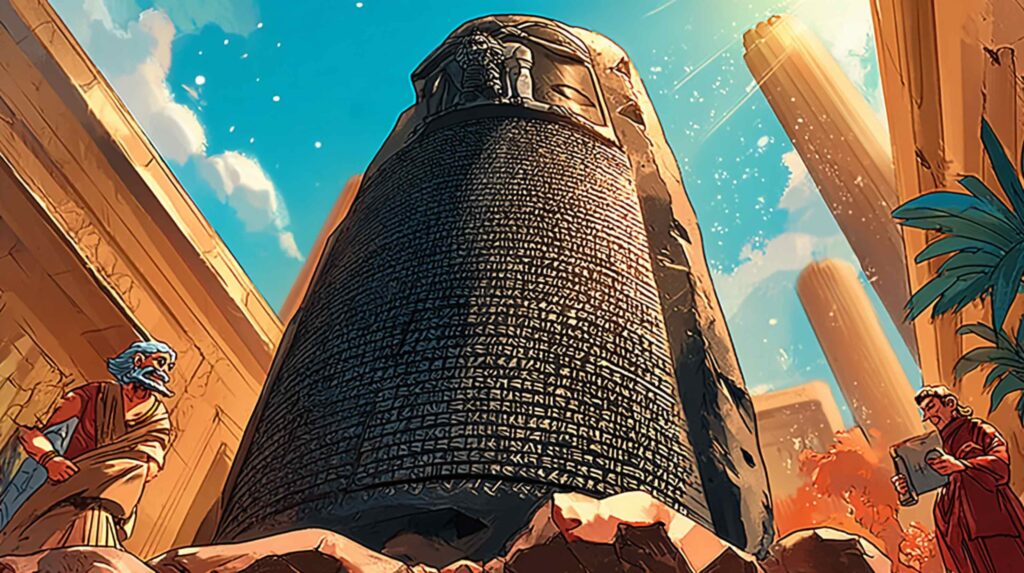
The Code of Hammurabi gets cited constantly and read almost never. That selective quotation is a significant loss, because the full document reveals something far more surprising than an ancient punishment chart: a civilization of extraordinary commercial sophistication operating under genuinely systematic rule of law.
Hammurabi’s 282 laws regulated professional wages, set liability standards for contractors (a builder whose structure collapses and kills the owner is executed brutal, but consistently applied to everyone), established divorce protections for women who retained dowry rights, and limited debt slavery to a maximum of three years. Hundreds of laws address loans, interest rates, trade partnerships, and deposit banking.
The uncommon reading: Hammurabi did not write these laws because he was unusually just. He wrote them because he understood something his military predecessors had not: legal legitimacy outlasts military victory. An army can hold territory for a generation. A written law can hold it for centuries. The black diorite stele standing in the temple of Marduk was not a monument to punishment. It was an infrastructure investment the first documented attempt to make political authority durable by encoding it in a form that persisted after the person who created it was dead.
This is the first recorded instance of institutional design as a longevity strategy: the recognition that the leader’s most important job is not to rule, but to build systems that rule in their absence.
Leadership Parallel: Every organization has unwritten rules operational norms that exist only in the heads of the people who created them and disappear the moment those people leave. Hammurabi’s insight is still the most important insight in organizational design: the rules that are written down survive. The ones carried in memory go with the person. Documentation is not bureaucracy. It is succession planning.
Was Babylon’s Hanging Gardens Real and Why Does the Answer Matter Less Than the Question?

Nebuchadnezzar II’s Babylon ruling 605 to 562 BCE was possibly the largest city on Earth: 200,000 people within its walls, entered through the Ishtar Gate’s stunning blue-glazed relief tiles, down a Processional Way designed to make every visitor feel the weight of the civilization they were entering.
The Hanging Gardens remain archaeology’s most celebrated mystery. Ancient sources describe tiered stone terraces irrigated by complex water-lifting machinery, planted with trees and flowers that appeared to float above the plain. Archaeologists have never found them with certainty. Some scholars now argue they may have been located in Nineveh, not Babylon, misattributed by later writers.
The more interesting question: Why did ancient writers find the Hanging Gardens credible in the first place? You only believe a story about a civilization growing a forest in the sky if you already believe that civilization capable of such things. The Gardens’ persuasiveness even in accounts written by people who hadn’t seen them is itself evidence of Babylon’s institutional authority. The city had built so much that was real and astonishing that the mythologized version was indistinguishable from the documented one.
This is brand trust operating at civilizational scale: the accumulated credibility of real achievement making even the unverified claims believable.
What Was the Egibi Banking Family and Why Are They the Most Overlooked Story in Ancient History?
The Babylonian Captivity is remembered as catastrophe. What it also was and this rarely makes the headline is one of the most significant documented cases of knowledge transfer as civilizational survival strategy.
When Nebuchadnezzar II brought the Jewish population to Babylon following the destruction of Solomon’s Temple in 587 BCE, he imported an intellectually sophisticated community into the most advanced intellectual environment in the ancient world. Babylonian mathematics, astronomy, and cosmology entered Jewish thought. The creation narrative of the Enuma Elish shares structural DNA with Genesis. The flood story of Utnapishtim preserved in the Epic of Gilgamesh, predating Noah’s account by at least a thousand years traveled home with the exiles.
The ideas carried out of Babylon shaped Judaism. Through Judaism, they shaped Christianity. Through Christianity, Islam. The intellectual inheritance of a city that fell in 539 BCE is still generating active theological debate in 2026.
Meanwhile, at the commercial level: the Egibi family archive spanning six generations of a Babylonian banking dynasty documents loan portfolios, real estate management, and estate administration at a level of sophistication that looks, functionally, like a modern wealth management operation. Interest-bearing loans. Trade partnerships operating on credit. Merchant guilds functioning on royal credit lines.
The original parallel: The Egibi family were operating proto-venture capital structures in the sixth century BCE. They made loans against future commercial activity, managed diversified asset portfolios, and maintained multigenerational continuity of the business through documented inheritance systems. The venture capital model did not originate in Sand Hill Road. Its structural ancestor is a Babylonian clay tablet archive.
How Did the Most Feared Military Empire in History Also Build the World’s First Library?
Ashurbanipal and the Supreme Paradox of Assyrian Civilization

Assyria is the empire history loves to reduce to its most extreme characteristic. And it earned the reduction: King Ashurnasirpal II’s palace annals describe the calculated atrocities inflicted on resisting cities in meticulous, publicly inscribed detail not because of sadism, but because terror was a documented, rational deterrence strategy. Cities that submitted were taxed and absorbed. Cities that resisted were destroyed. The math was made visible deliberately.
The Assyrian military the first major power to field a primarily iron-equipped army, operating systematic siege engineering was the ancient Near East’s dominant force for three centuries.
And then there is Ashurbanipal.
Ruling from 668 to 631 BCE, he was simultaneously the commander of the most feared army in world history and the curator of the world’s first organized archive of human knowledge. He could read and write in multiple languages a statement so unusual for any ancient king that it is worth pausing on. He ordered scribes throughout the empire to copy every significant text they could locate and send the originals or copies to his capital at Nineveh.
The result was approximately 30,000 clay tablets: astronomical records, medical texts, mathematical tables, religious hymns, historical chronicles and the Standard Babylonian Version of the Epic of Gilgamesh, the world’s first great literary work, which Ashurbanipal’s library preserved for the next two and a half millennia.
The Jungian Shadow dimension: Gilgamesh is, at its core, the story of a king who conquers everything, loses his closest companion, and is thereby forced to confront mortality eventually learning to value what was always at hand rather than seeking immortality through conquest. Ashurbanipal sent armies to Egypt and impaled rebels in the provinces, and simultaneously preserved the story of a king who learned that conquest is not the answer. Did he not see the irony? Or did he see it completely preserving the critique of everything he was, while continuing to be it?
This is what historians call Complexity: the uncomfortable recognition that great civilizations contain their own refutation simultaneously. The most violent empire in ancient history was also the one that kept humanity’s wisdom alive long enough for us to read it.
Leadership Parallel: Organizations that destroy institutional memory in pursuit of speed create the same paradox Assyria lived. The archive is not the opposite of operational urgency. It is what makes operational urgency sustainable across more than one leadership generation. Ashurbanipal, for all his military ruthlessness, understood that the most durable form of power was not conquest. It was custodianship of knowledge. What Nineveh’s library preserved outlasted Nineveh by twenty-six centuries.
Why Did Babylon Fall Without a Battle and What Does That Tell Us About How Institutions Actually Collapse?
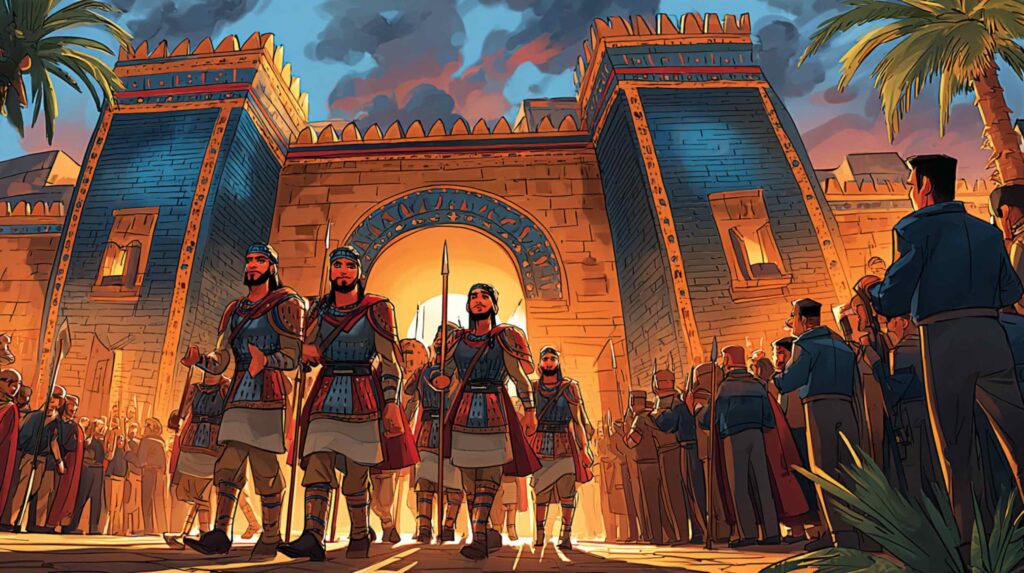
The greatest city in the ancient world did not fall to a siege.
In 539 BCE, Cyrus the Great of Persia approached Babylon with an army. The gates, according to the Cyrus Cylinder one of the most important ancient texts in existence, now in the British Museum were opened for him. The Marduk priesthood, the most powerful religious institution in the city, had effectively chosen a foreign liberator over their own neglectful king, Nabonidus, who had spent a decade in self-imposed exile devotedly worshipping the wrong god.
Cyrus entered Babylon without battle. The Cyrus Cylinder describes this explicitly and frames it as Marduk himself having “called” Cyrus to restore proper worship. It is both genuine religious conviction and the most sophisticated ancient example of what we would now call change management communications: the new leadership reframes the acquisition not as conquest but as restoration.
The uncommon institutional reading: Babylon did not collapse from external pressure. It collapsed from internal legitimacy failure. Nabonidus had broken the implicit contract between king and priestly institution: the king maintained the god’s worship; the priests maintained the king’s sacred mandate. When he abandoned Marduk for Sin, he severed the institutional relationship that gave the city’s power structure its coherence. The Persian army was not the cause of the fall. It was the solution the system selected for a legitimacy problem it could no longer solve internally.
This pattern is not ancient. It is the mechanism by which most major institutional collapses occur today not through external assault, but through the withdrawal of internal legitimacy by the people who had been the institution’s core constituency.
How Does Mesopotamia Live in 2026? The Invisible Architecture of Everything We Build
The Tigris and Euphrates still flow diminished now by dams, over-extraction, and climate change that carries its own Mesopotamian echo.
But the civilization built on their banks left behind something the rivers themselves cannot carry: a set of operating instructions for organized human life that proved more durable than every dynasty that used them.
In every court that enforces a written contract. In every clock marking a sixty-minute hour. In every hospital maintaining patient records. In every government that distinguishes between the ruler’s personal wealth and the public treasury. In every algebra problem solved by a student who has no idea they are using a mathematical framework developed in Babylon in the first millennium BCE.
The most important thing Mesopotamia left behind is the thing least often mentioned: the clay tablet itself. Fired accidentally by the same conflagrations that destroyed the libraries around it, the clay became ceramic indestructible, patient, impervious to water and time. The very catastrophes that ended Mesopotamian civilization preserved its written record by baking it into something harder than stone.
The antifragility metaphor that nobody else has drawn: The clay tablet is the only human information storage medium in history that becomes more durable when its environment becomes more hostile. Papyrus burns. Parchment rots. Digital storage requires ongoing infrastructure and power. The Sumerian administrative record survives precisely because the ancient world had no fire suppression systems.
What was written in wet earth to count grain became, by accident, the most resilient archive in human history.
Leadership Parallel: The organizations most likely to survive catastrophic disruption are not those that built for growth in ideal conditions. They are those whose documentation, institutional memory, and process infrastructure became load-bearing before the crisis arrived so that when the crisis came, the fire baked everything into something that couldn’t be destroyed.
Why Did the People Who Invented Time Get Lost to It?
The question that opened this documentary deserves the answer it was always building toward.
They didn’t lose. Not permanently. Not in the ways that matter.
Sumer, Akkad, Babylon, and Assyria were each lost to political time to the dynastic cycles, the climate events, the overextended empires, the legitimacy crises that ended every political structure the region ever produced. They were lost to the visible, nameable events that fill history textbooks.
But they were never lost to human time the slower, deeper time in which ideas persist after every dynasty that hosted them has turned to dust.
The 60-minute hour is still running. Quadratic algebra is still being taught. The Epic of Gilgamesh is still being read still, 4,000 years after Ashurbanipal’s scribes copied it onto clay, the story of a king who learns too late to value what he had while he had it.
The cuneiform tablet needs no electricity. No server. No password. It needs only someone willing to learn its language. And in every generation since its rediscovery, someone has.
Mesopotamia’s real achievement was not the ziggurat or the hanging garden or the iron army. It was the proof pressed into clay five thousand years ago because someone needed to count their grain that the hunger to build something lasting, something worth recording, is not a modern ambition.
It is the oldest thing about us.
FAQ: Ancient Mesopotamia, Civilizational Collapse, and What History Actually Teaches
Q: What caused the fall of the Akkadian Empire?
The Akkadian Empire collapsed around 2154 BCE due to a combination of factors: the 4.2 Kiloyear Event (a prolonged drought lasting approximately 300 years that devastated agricultural yields in northern Mesopotamia), military overextension under Naram-Sin that depleted the treasury, and suppressed resentment among conquered peripheral populations. The climate event was the immediate trigger, but structural overextension had created systemic brittleness before the environmental shock arrived.
Q: What is the Code of Hammurabi and why does it matter today?
The Code of Hammurabi (c. 1754 BCE) is a Babylonian legal code of 282 laws inscribed on a black diorite stele. It regulated commercial activity, professional liability, wages, marriage, divorce, and debt. Its significance is not the “eye for an eye” principle but its underlying innovation: encoding political authority in written law so that it persisted beyond the individual ruler. It is the first documented attempt at what organizational theorists now call institutional design building systems that govern in the absence of the person who created them.
Q: Did the Hanging Gardens of Babylon actually exist?
The archaeological evidence is inconclusive. No confirmed excavation of the Hanging Gardens at Babylon has been made, and some scholars argue they may have been located at Nineveh and misattributed to Babylon in later accounts. However, ancient writers found the description credible enough to record itself a reflection of Babylon’s documented capacity for extraordinary engineering. Whether the Gardens were real or embellished, they represent how civilizational credibility functions: accumulated real achievement makes even the mythologized claims believable.
Q: What was the Cyrus Cylinder and what does it reveal about the fall of Babylon?
The Cyrus Cylinder (539 BCE, now in the British Museum) is an ancient clay document in which Cyrus the Great of Persia describes his bloodless entry into Babylon as divinely sanctioned framing his conquest as the restoration of proper worship of the god Marduk, whom the Babylonian king Nabonidus had neglected. It reveals that Babylon fell not through military defeat but through internal legitimacy failure: the Marduk priesthood, the city’s most powerful institution, effectively withdrew support from their own king and facilitated Persia’s entry. The cylinder is also historically notable as an early document expressing religious tolerance and is sometimes described as a precursor to human rights declarations, though historians debate the extent of that framing.